
The moons of the solar system are one of my favorite topics to explore. These natural satellites come in all shapes and sizes, from icy worlds hiding under thick crusts to volcanic landscapes loaded with activity. If you’re curious about the wild variety and secrets hidden among the planets’ companions, you’re definitely not alone. A closer check into these moons reveals how fascinating and diverse the solar system truly is, offering insights that help scientists piece together the story of how the solar system formed and changed over time.
Why Moons Matter in the Solar System
Moons play a key role in shaping the environments and histories of their host planets. They affect everything from tides on Earth to the intense volcanic activity on Jupiter’s moon Io. Some moons have unique features, like thick atmospheres, subsurface oceans, or odd surface markings that fire up the imagination of scientists and space fans alike. They also act as windows into the conditions that existed when the solar system was young, essentially serving as time capsules that offer clues about the wider universe beyond our reach.
There are over 200 known moons orbiting the planets in our solar system, and new ones get spotted now and then as telescopes and space missions get better and more advanced. This wild diversity makes them a goldmine for anyone interested in space and astronomy.
A Quick Tour of the Major Moons
Each planet with moons brings its own stories and quirks. Here are some highlights and details about these moons to help give you a sense of why they’re so interesting:
- Earth’s Moon: The one we see every night is responsible for ocean tides and plays a part in stabilizing Earth’s tilt, making Earth’s climate more steady.
- Jupiter’s Moons: With 95 confirmed moons (as of early 2024), Jupiter leads the pack. Its four largest moons, the Galilean moons—Io, Europa, Ganymede, and Callisto—are especially well known for their massive size and striking features.
- Saturn’s Moons: Saturn follows closely with over 80 moons, including Titan, which is larger than Mercury and has an atmosphere even thicker than Earth’s. Then there’s Enceladus, famous for its icy geysers that shoot water vapor into space.
- Uranus and Neptune’s Moons: Uranus has 27 known moons, while Neptune has 14. These moons, like Triton and Miranda, are loaded with mystery and are full of strange surface features that set them apart.
- Mars’ Moons: Mars has two tiny, irregular moons, Phobos and Deimos, which look more like asteroids than traditional moons, raising the question if they were captured rather than formed around Mars.
Venus and Mercury, worth noting, don’t have any moons at all. Their close position to the Sun and smaller gravity fields make it tough for them to hold onto satellites or catch any passing objects.
How Moons Form and What Makes Them So Unique
Not all moons form in the same way. Some moons are thought to have formed alongside their planet from the original disk of gas and dust left over from the Sun’s birth. Others were likely captured—maybe as asteroids or Kuiper Belt objects grabbed by a planet’s gravity. Some, like Earth’s Moon, are believed to have formed after massive collisions early in the solar system’s history, which threw up debris that later stuck together.
This variety means every moon tells a different story, showing off a range of compositions: rock, ice, or even thick atmospheres. There are even moons covered in icy crusts hiding liquid water, as well as intensely volcanic places made of sulfur and rock. No two moons are exactly the same, which is why researchers love sending spacecraft out to study them firsthand. Each visit provides entirely new clues about how planets and their satellites came to be.
- Icy Moons: Many outer planet moons have surfaces of water ice (Europa, Enceladus) or methane ice (Triton). These frozen surfaces may hint at possible oceans or lakes under the shell of ice.
- Volcanic Moons: Io is by far the most volcanic body in the solar system. It’s loaded with giant lava lakes and volcanoes, thanks to strong tidal forces from Jupiter that constantly flex and heat its interior.
- Atmospheric Moons: Titan’s thick, hazy atmosphere and methane lakes make it a rare place—nothing else in the solar system is quite like it.
Additionally, scientists check for new or strange chemistry on these moons, like organic molecules or exotic ices not usually found on Earth. By studying the makeup and history of these different moons, astronomers get a better understanding of how planets, asteroids, and moons fit together in the big puzzle of the solar system.
Exploring the “Big Four” of Jupiter: Io, Europa, Ganymede, and Callisto
The Galilean moons of Jupiter are among the biggest and most studied in the solar system. I find them especially fascinating because each is basically its own unique world, offering examples of everything from extreme volcanic activity to frozen, potentially habitable oceans.
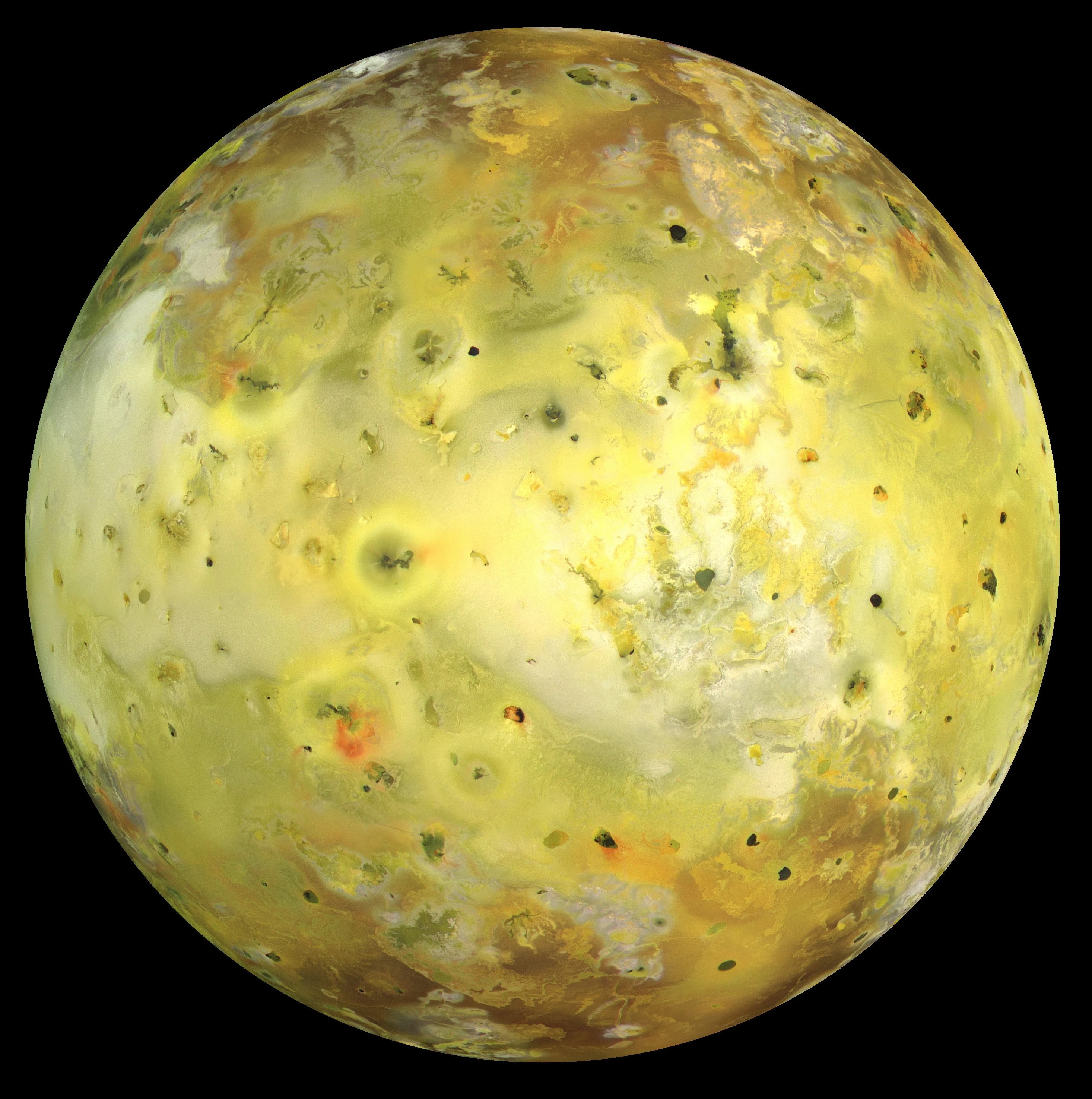 The Jovian moon Io. photograph by the spacecraft Galileo July 1999. (NASA)
- Io: Famous for being the most volcanically active world in the solar system. Massive lava lakes and always-changing landscapes make Io stand out. Sulfur and volcanic plumes color its surface in yellows and reds, and new eruptions have been caught on camera from orbiting spacecraft.
 The Jovian moon Europa. Photograph by the spacecraft Galileo September 1996. (NASA)
- Europa: This icy moon has a smooth surface covered in cracks, suggesting a vast liquid ocean lies beneath. NASA’s upcoming Europa Clipper mission aims to check for possible signs of life or key ingredients—like water, heat, and chemicals—that could help small organisms survive.
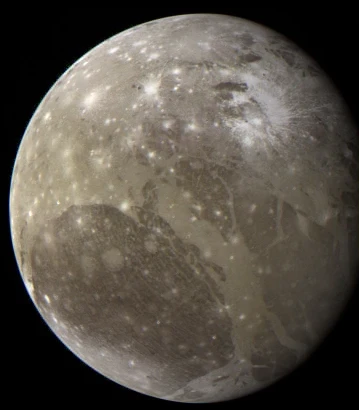 The Jovian moon Ganymede. Photograph the spacecraft Galileo March 1998. (NASA)
- Ganymede: The largest moon in the solar system—even bigger than Mercury—and the only moon to have its own magnetic field. There’s evidence it has layers of water and ice beneath its crust, possibly with a salty ocean even deeper below.
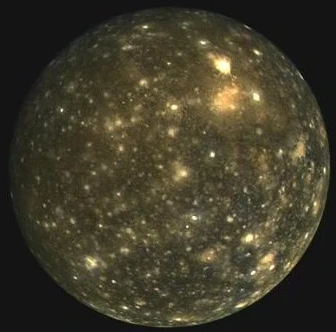 The Jovian moon Calisto. Photograph Voyager 2 July 1979. (NASA)
- Callisto: Known for its heavily cratered surface, Callisto is almost untouched since the solar system’s early days, serving as a fossil record of ancient impacts and cosmic events.
Together, these moons give us a taste of the incredible variety and possibilities out there, from extreme volcanism to opportunities for life.
Unusual Moons Worth Checking Out
Beyond the headlines, there are loads of lesser-known moons with truly eye-catching features. If you’re into finding oddball worlds, here are a few that always pull my attention:
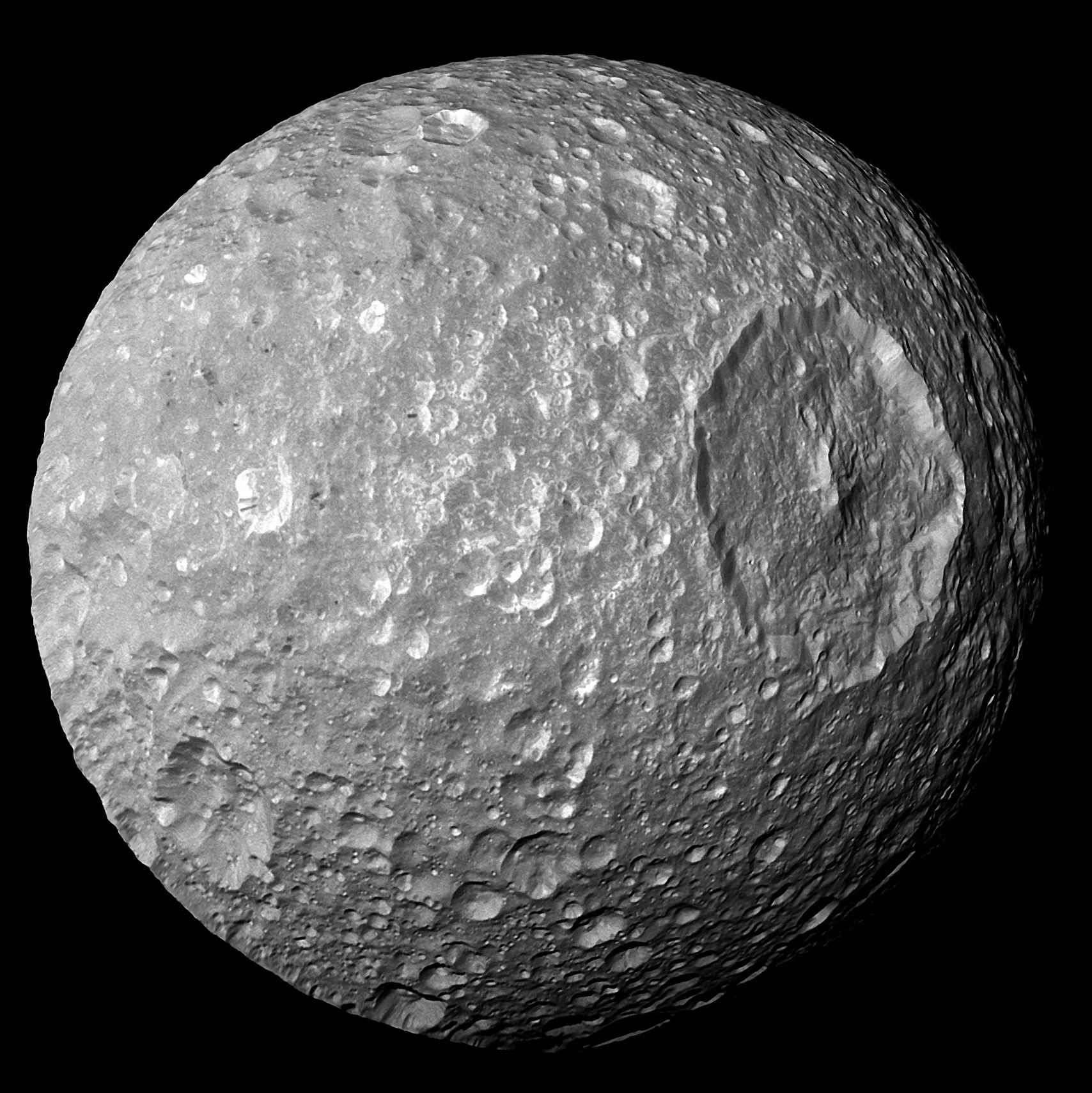 The Saturnian moon Mimas. Photograph space craft Cassini February 2010 (NASA)
- Mimas (Saturn): Looks like the Death Star from Star Wars thanks to its giant Herschel Crater that dominates one hemisphere.
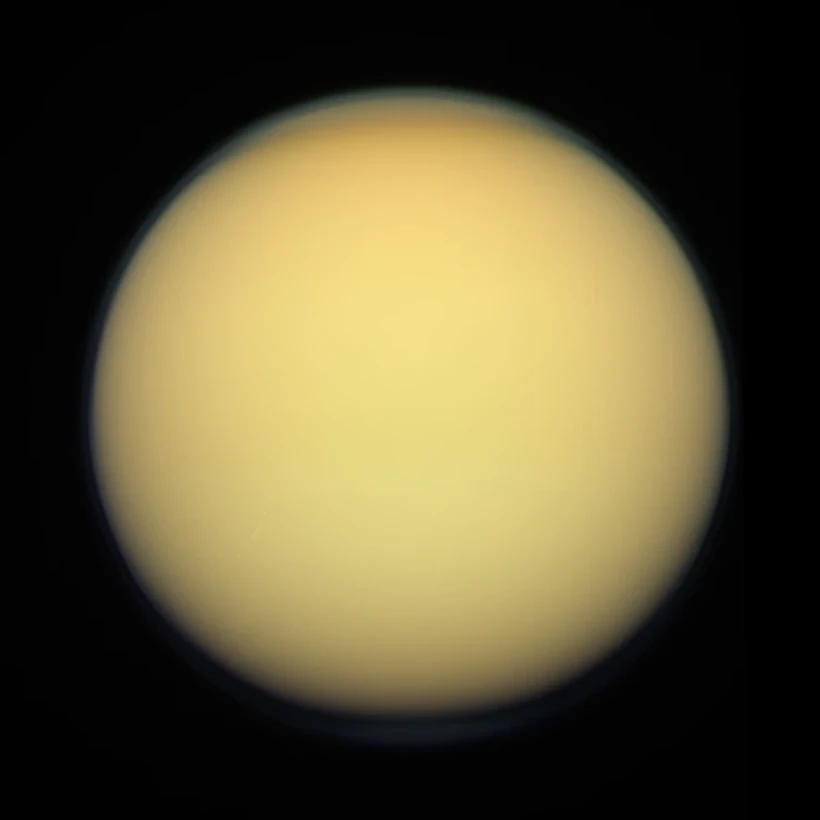 The Saturnian moon Titan. Photograph Space craft Cassini March 2018. (NASA)
- Titan (Saturn): Only known moon to have a thick atmosphere. This atmosphere is mainly made up of nitrogen. Beneath these clouds lies a landscape made up of rivers and lakes of liquid methane and ethane.
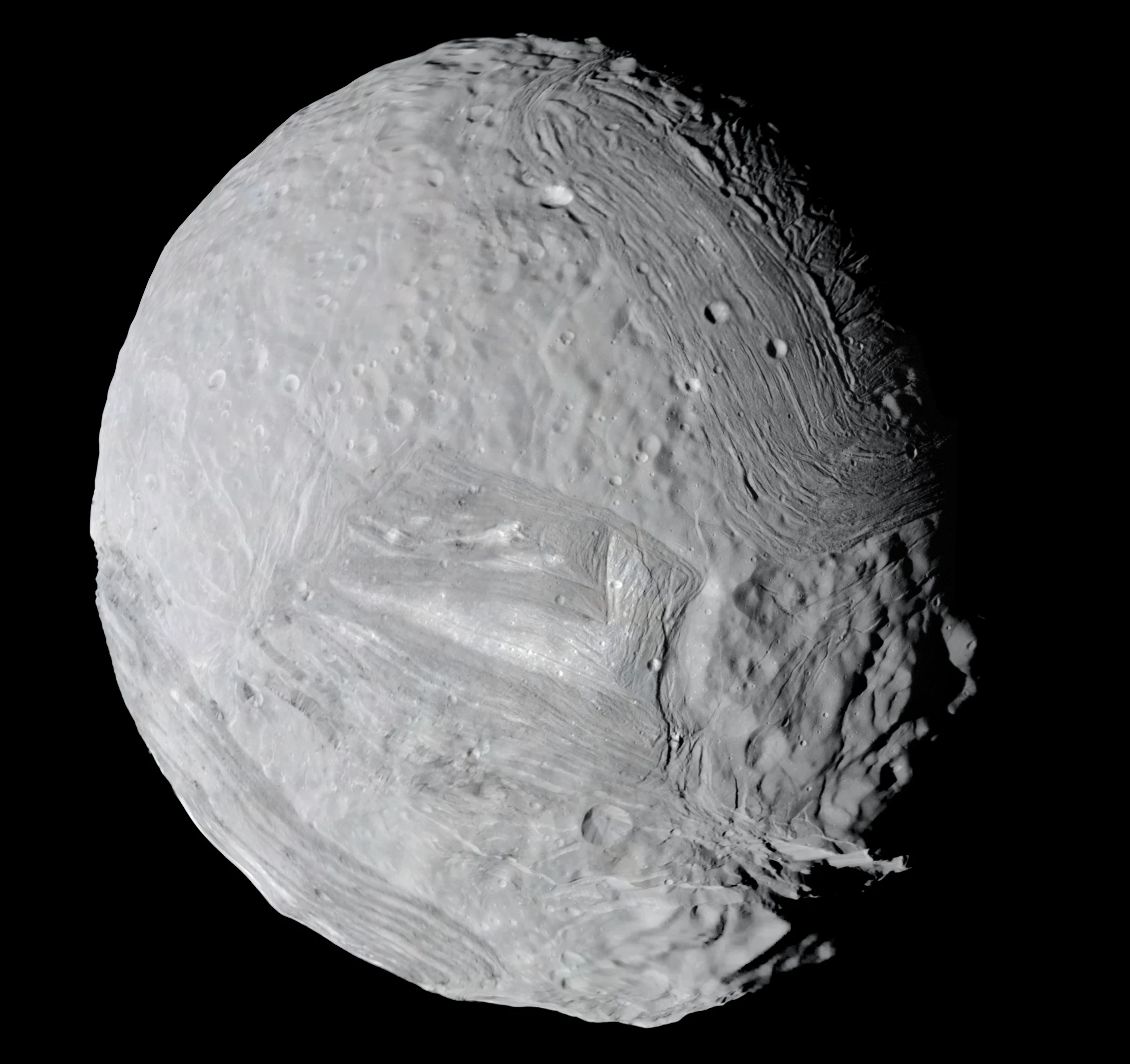 The moon Miranda. Mosaic photograph. Voyager 2. January 1986. (NASA)
- Miranda (Uranus): Its surface is a wild jumble of ridges, cliffs, and canyons, making it look like it was smashed apart and then stuck back together in a patchwork quilt shape.
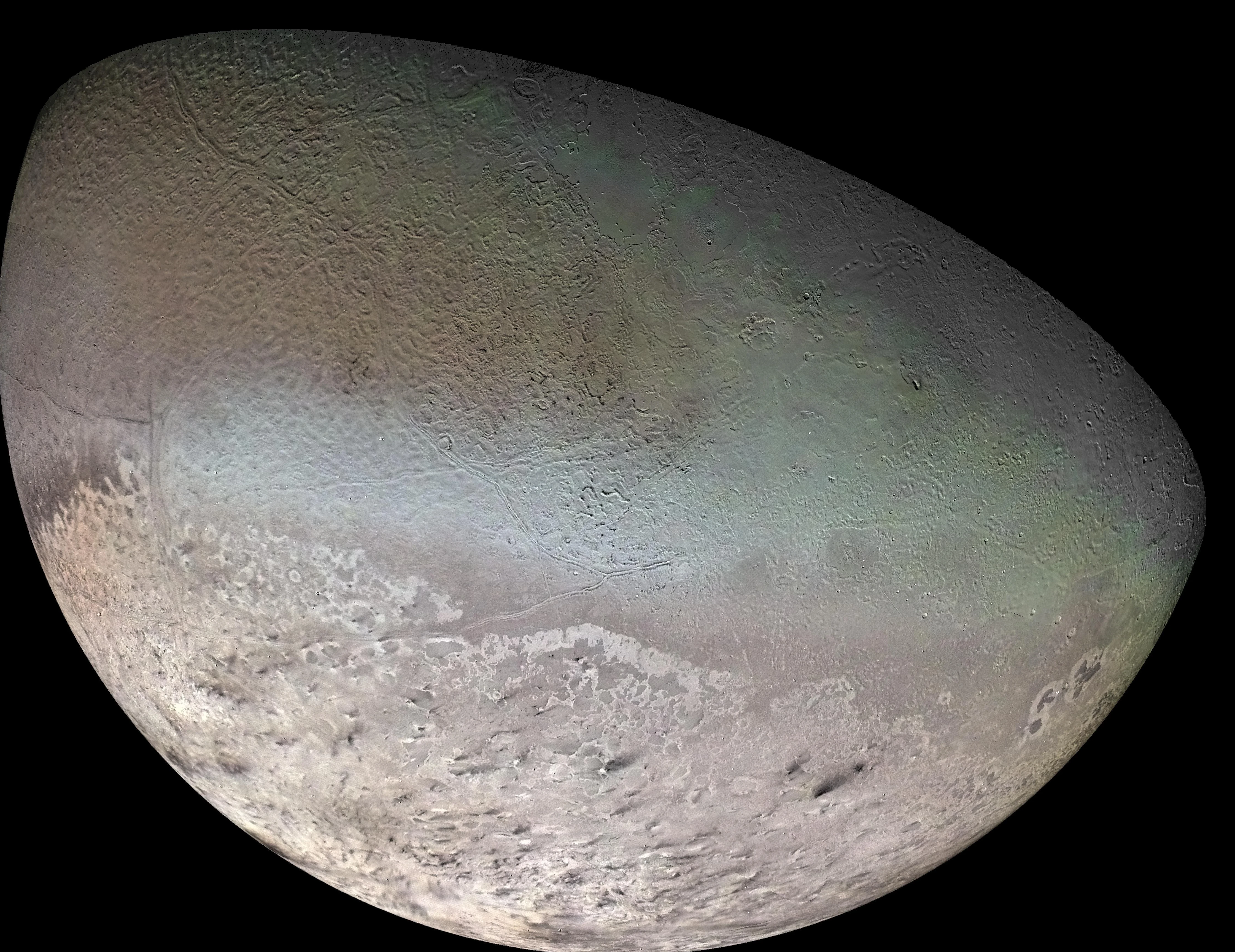 The moon Triton. Mosaic photograph. Voyager 2 August 1989.
- Triton (Neptune): Orbits Neptune backward compared to most big moons and has geysers that spew nitrogen ice. It may actually be a captured object from the outer reaches of the solar system, rather than having formed around Neptune itself.
Other moons like Enceladus continually surprise scientists by shooting jets of water ice and organic molecules into space. These plumes form Saturn’s E ring and are constantly being investigated for hints of life’s building blocks.
How many Moons are there in the Solar System?
The last count of known moons (as of March 2025) in our Solar System was 891. This was made up of: 491 moons orbiting planets and 470 moons orbiting Dwarf Planets, asteroids and Trans Neptune Objects. (Data NASA)
Things That Make Moons Really Interesting for Science
Moons aren’t just fascinating objects in the night sky—they offer real science value. Here’s what keeps astronomers glued to their telescopes or mapping out more space missions:
- Habitability: Many icy moons have subsurface oceans. Places like Europa and Enceladus might have the right stuff for microbial life, thanks to liquid water and energy sources. If life is found in these dark, distant oceans, it would transform our ideas about where life can exist.
- Origins: Studying moons helps unravel how planets formed and how water and organic material may have been delivered across the solar system, including to Earth.
- Geological Activity: Volcanic eruptions on Io, water geysers on Enceladus, or shifting ices on Europa show that these worlds are active and changing, rather than dead and silent. Studying that activity shows us how moons repair or shape their surfaces and environments.
On top of that, moons sometimes even affect their parent planets in unexpected ways. For instance, they can create gaps in planetary rings, steer the orbits of smaller moons, or shape radiation belts. All these details help scientists track down how the solar system keeps its balance and why it looks the way it does.
Real-World Examples of Moons in Action
Exploring moons isn’t limited to scientists with million-dollar spacecraft. Students, amateur astronomers, and anyone with a telescope—or even a decent pair of binoculars—can learn plenty just by observing or reading up on these objects. For instance, you can see the changing shadows and movements of Jupiter’s largest moons if you check with a backyard telescope. Amateur astronomers have even helped spot new moons or track volcanic eruptions from Earth, proving that there’s a place for everyone in space science.
Space missions are our main source of close-up details. Projects like Cassini (to Saturn), Galileo (to Jupiter), and New Horizons (which flew by Charon, Pluto’s largest moon) have completely changed what we know. Every mission brings back new images, chemical signatures, or odd behaviors that challenge what we expect. The flow of new data sparks fresh questions and pushes researchers to dig even deeper, combining Earth-based and space-based discoveries.
In addition, the growing number of space agencies working on moon missions—from NASA and the European Space Agency to China and India—means that discoveries will speed up. Each new orbiter, lander, or flyby mission brings in cutting-edge technology and opens up more of these worlds than ever before.
Preparing to Explore Moons: What to Know if You’re Just Getting Started
If you want to check out more about the solar system’s moons, here’s a quick set of ideas and resources that work for anyone eager to start learning:
- Use a Telescope or Binoculars: Fancy gear isn’t always necessary. Some of the largest moons—like Jupiter’s Galilean moons—are clearly visible as small points moving across the planet’s face, night after night.
- Check Out Planetarium Apps: Many apps allow you to track which moons are visible and when, making it easy for you to catch rare events like a moon passing in front of its planet or casting a shadow.
- Explore NASA Websites and Mission Pages: NASA and other agencies maintain huge libraries of real images, up-to-date discoveries, and even livestreams from ongoing spacecraft.
- Join Astronomy Clubs: In-person clubs or online communities make it easy to swap tips, sharpen your observing skills, and get solid advice about tracking down moons with minimal equipment.
Don’t forget about books and documentaries as well! These often feature dramatic visuals and breakdowns of the most eye-catching discoveries, making it fun and engaging to pick up new facts.
Common Questions About Moons of the Solar System
Here are some frequent questions people ask when they first get into moons and their mind-blowing stories:
Question: What’s the biggest moon in the solar system?
Answer: Ganymede, orbiting Jupiter, is the largest, even bigger than the planet Mercury. It also sports its own magnetic field thanks to a partially liquid, metallic core deep inside.
Question: Could life exist on any of the moons?
Answer: Scientists think that a few moons, especially Europa and Enceladus, might have the right stuff—like liquid water and an energy source—to support tiny life forms. Nothing’s been found yet, but every new discovery keeps hope alive.
Question: Are all moons round?
Answer: Not at all! Only moons large enough for their gravity to pull them into a round shape look spherical. Smaller moons, like Mars’s Phobos and Deimos, are lumpy and irregular, much more like asteroids than little Earths.
Looking Ahead: The Future of Moon Exploration
The moons of the solar system are packed with surprises, mysteries, and signs that there’s still so much more to stumble upon. Scientists are planning to send more advanced spacecraft and even landers to visit these worlds. Missions on the horizon—like NASA’s Europa Clipper and the European Space Agency’s JUICE—promise to bring back new details about life under thick ice shells or inside hazy atmospheres. Each new mission, observation, or backyard stargazing session adds to what we know, keeping this wild ride of discovery rolling for future generations.
Author: Dave Anscombe. Amateur Astronomer and Astrophotographer.
Information NASA
Thank you for this fascinating introduction to the moons of our solar system! Since I’m completely new to this topic, I’m still trying to understand why some planets have many moons and others have none. Could you explain what determines whether a planet ends up with lots of moons like Jupiter and Saturn, versus none at all like Mercury and Venus? And does the planet’s size or position in the solar system affect this?
Hello HalfAmazing and thank you for your comments.
The jury is still out on why some planets have more than one moon. A lot of the moons that some planets have are most likely captured asteroids. Mar’s two moons, Phobos and Deimos have diameters of 22.2km (13.8 miles) and 12.6km (7.8 miles) respectively. Both have irregular shapes and are most certainly captured asteroids. Our Moon probably formed after a collision between the proto Earth and a proto planet named Thea moving in the same orbit as Earth. For others their lives may well have started as proto planets orbiting the Sun but due to the movements of Jupiter and Saturn through the Solar System may have moved these proto planets to become Moons of the major planets. Some proto planets may have been ejected from the Solar System altogether.
As to why Venus does not have a moon, I cannot find any information regarding this.
Dave