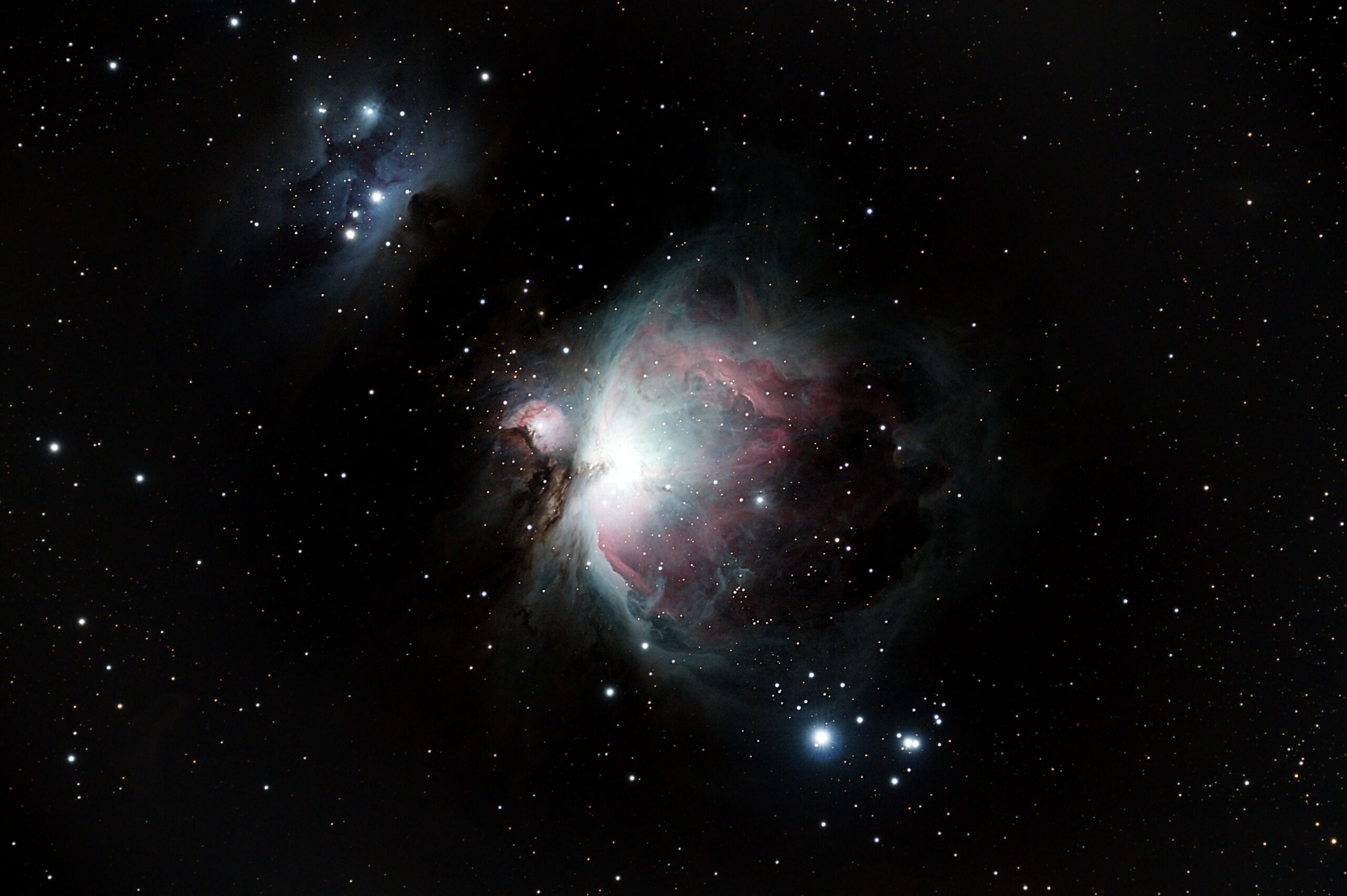
Best deep sky objects for beginners are some of the most rewarding sights in amateur astronomy. Unlike planets, deep sky objects include nebulae, galaxies, and star clusters located far beyond our Solar System. Many of these objects are surprisingly easy to observe with beginner telescopes and binoculars, making them perfect targets for new stargazers looking to explore deeper into space.
What Are Deep Sky Objects?
Deep sky objects are celestial objects located outside our Solar System. These include:
- galaxies
- nebulae
- globular clusters
- open star clusters
Unlike planets, which appear relatively small and bright, deep sky objects often appear faint and spread out across the sky. Observing them usually requires darker skies and a little patience, but the reward is incredible.
Many beginners are surprised to discover they can see entire galaxies and glowing clouds of gas from their own garden using modest equipment.
If you are new to astronomy, read our beginner stargazing guide here.
The Orion Nebula
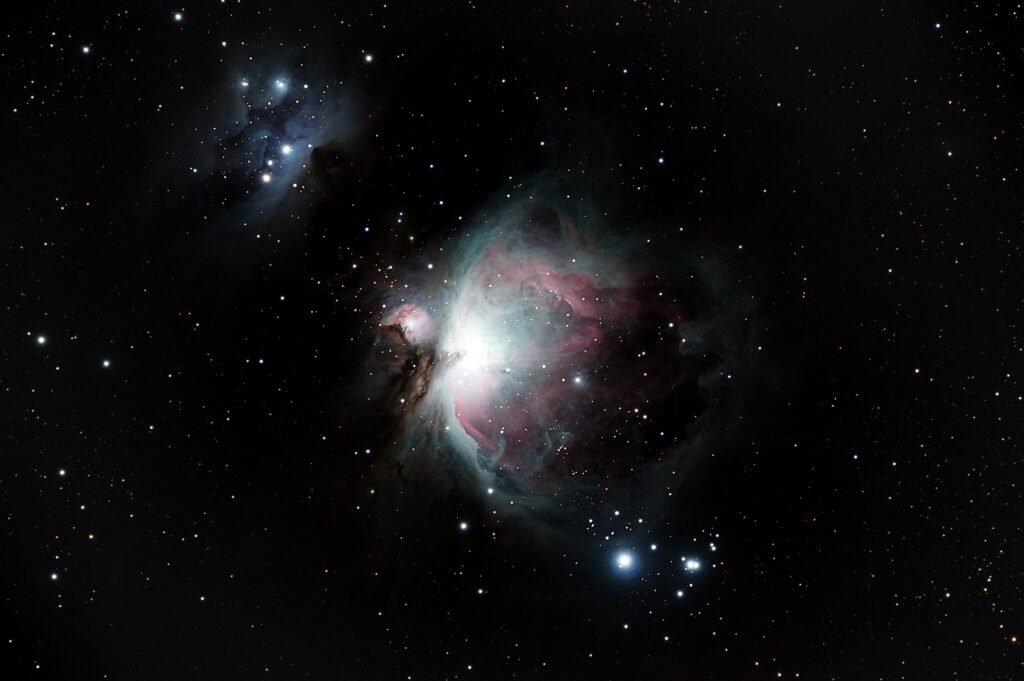
The Orion Nebula is one of the easiest and most spectacular deep sky objects visible to beginners. Located in the constellation Orion, this glowing cloud of gas is a massive stellar nursery where new stars are being born.
Even binoculars can reveal the nebula as a faint glowing patch beneath Orion’s Belt. Through a telescope, more structure and detail become visible, especially under dark skies.
The Orion Nebula is best observed during winter months in the Northern Hemisphere and is often the first nebula new astronomers successfully locate.
The Andromeda Galaxy
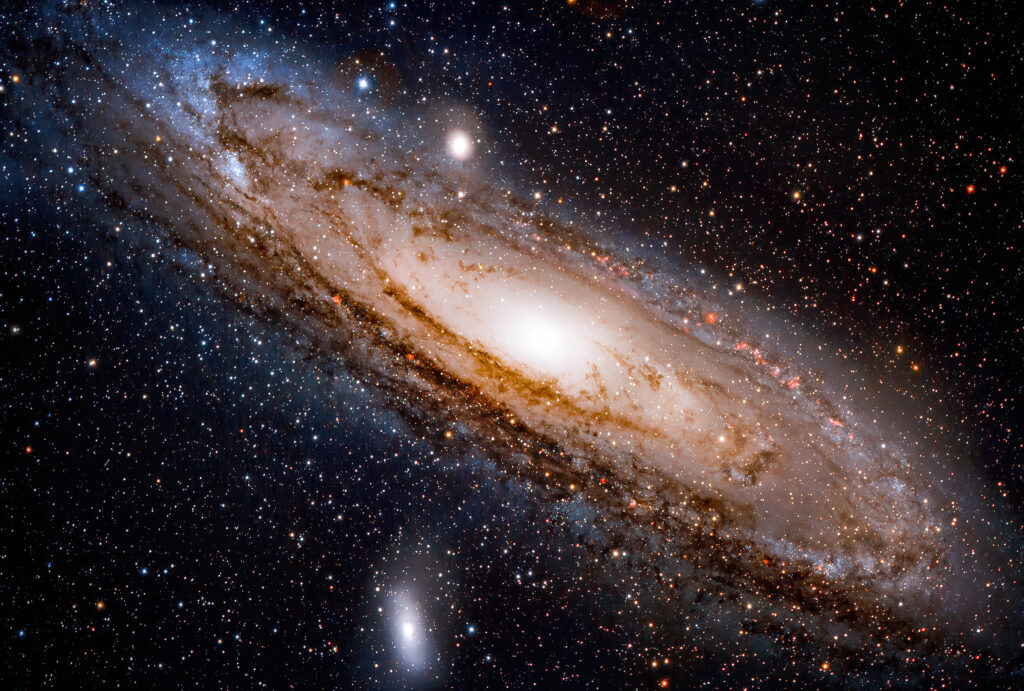
The Andromeda Galaxy is the closest major galaxy to the Milky Way and one of the most famous deep sky objects in astronomy. Located over two million light-years away, it is the most distant object visible to the naked eye under dark skies.
Through binoculars, Andromeda appears as a soft oval glow. Larger telescopes can begin revealing its bright core and elongated shape.
Observing another galaxy for the first time is often a memorable moment for beginner astronomers because it highlights the enormous scale of the universe.
The Pleiades Star Cluster
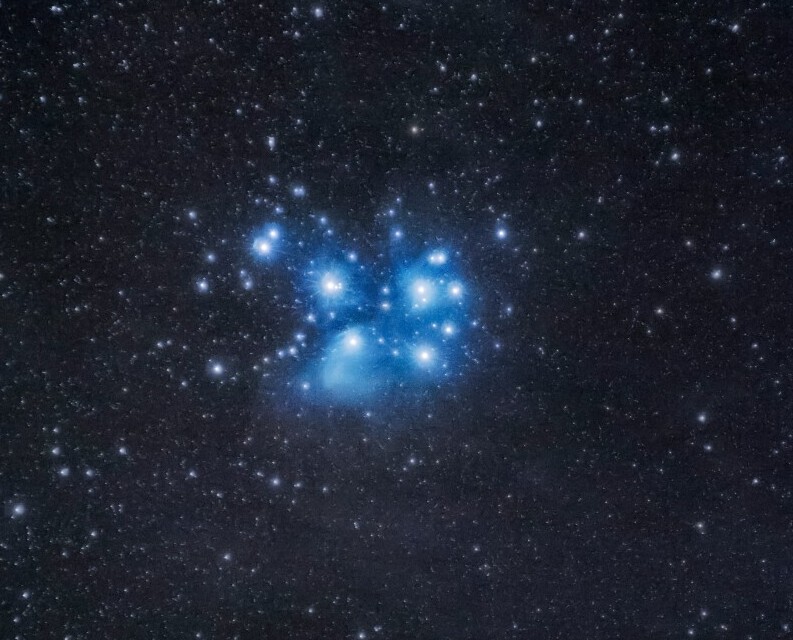
The Pleiades, also known as the Seven Sisters, is a bright open star cluster located in the constellation Taurus. It is one of the easiest deep sky objects to spot without any equipment.
Binoculars provide excellent views of the cluster because the stars spread across a large area of sky. Telescopes with low magnification also create beautiful wide-field views.
The Pleiades are especially popular during autumn and winter and are ideal for beginners learning how to navigate the night sky.
The Ring Nebula

The Ring Nebula is a famous planetary nebula located in the constellation Lyra. It formed when a dying star expelled its outer layers into space.
Through smaller telescopes, the Ring Nebula appears as a faint smoke ring or tiny glowing oval. Larger telescopes reveal more detail and structure.
Because of its relatively small size, moderate magnification often works best when observing the Ring Nebula.
The Hercules Globular Cluster
The Hercules Globular Cluster, also called M13, is one of the brightest globular clusters visible from Earth. It contains hundreds of thousands of stars packed tightly together.
Small telescopes show M13 as a fuzzy glowing ball, while larger instruments begin resolving individual stars around the edges.
This cluster is particularly impressive during summer evenings and is often considered one of the finest deep sky objects for beginners.
What Equipment Helps You Observe Deep Sky Objects?
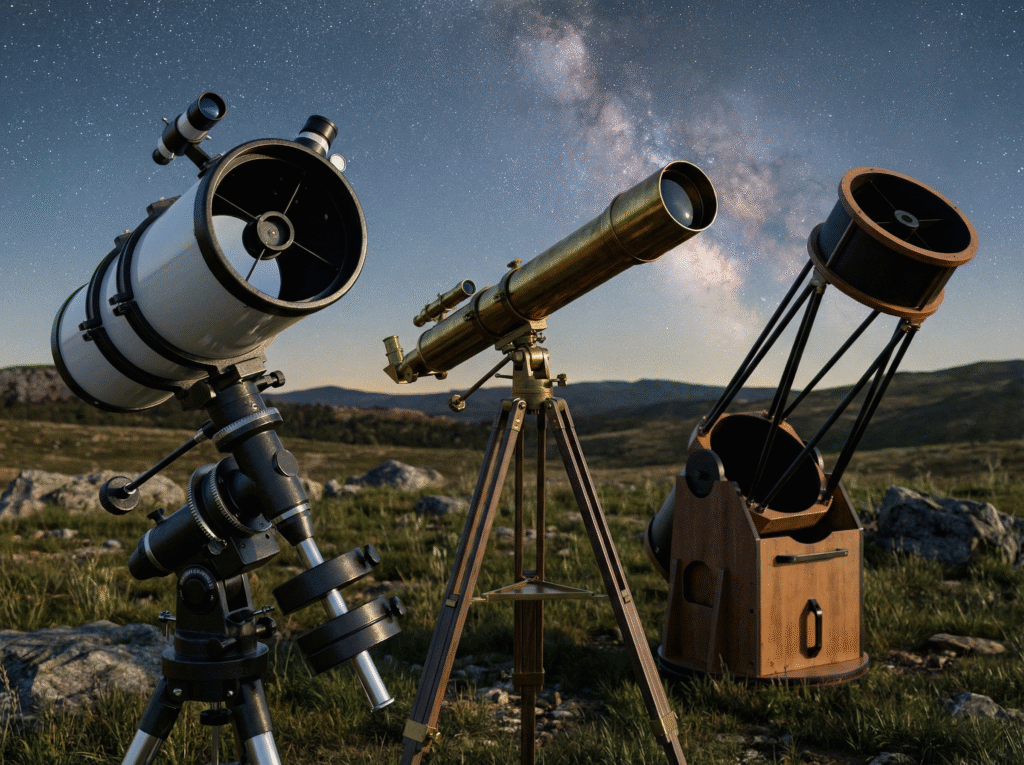
Different types of equipment can improve deep sky viewing dramatically.
Telescopes
Larger telescope apertures collect more light, making faint deep sky objects easier to observe. Reflector telescopes and Dobsonian telescopes are especially popular for deep sky astronomy because they offer large mirrors at affordable prices.
You can browse our beginner telescope recommendations here.
Eyepieces
Wide-angle eyepieces often work best for deep sky observing because many nebulae and star clusters appear quite large in the sky.
Higher-quality eyepieces can improve:
- contrast
- sharpness
- viewing comfort
See our recommended eyepieces here.
Filters
Nebula filters can improve contrast when observing certain glowing nebulae by blocking unwanted light pollution.
Filters are especially useful for:
- the Orion Nebula
- the Ring Nebula
- emission nebulae
You can browse astronomy filters here.
Binoculars
Many deep sky objects look excellent through binoculars, especially large star clusters and bright galaxies.
Binoculars are lightweight, portable, and ideal for beginners learning the night sky.
See our recommended astronomy binoculars here.
Tips For Observing Deep Sky Objects
Find Darker Skies
Light pollution is one of the biggest challenges for deep sky observing. Even travelling a short distance away from city lights can improve visibility dramatically.
Allow Your Eyes To Adapt
Dark adaptation is extremely important. Give your eyes at least 20–30 minutes to adjust fully to darkness.
Use Averted Vision
Looking slightly to the side of faint objects often makes them easier to see because the edges of your vision are more sensitive to dim light.
Be Patient
Deep sky observing improves with practice. The longer you observe an object, the more detail you begin noticing.
Why Deep Sky Objects Often Look Different Through A Telescope
Many deep sky images online show bright colours and incredible detail that are usually captured using long-exposure astrophotography and image processing. Through a telescope, most nebulae and galaxies appear much fainter and often greyish to the human eye, especially under light-polluted skies. However, seeing these objects in real time with your own eyes is still an amazing experience and becomes more rewarding with practice and darker observing conditions.
Start With Bright Objects
Objects like Orion, Andromeda, and the Pleiades are ideal beginner targets before moving on to fainter nebulae and galaxies.
Frequently Asked Questions
What is the easiest deep sky object to see?
The Orion Nebula and the Pleiades are usually considered the easiest deep sky objects for beginners.
Can you see galaxies with a beginner telescope?
Yes. The Andromeda Galaxy is visible even with binoculars under dark skies.
Do deep sky objects require dark skies?
Darker skies help significantly, although some brighter objects remain visible from suburban areas.
Are binoculars good for deep sky observing?
Absolutely. Binoculars are excellent for large star clusters and bright galaxies.
What telescope is best for deep sky objects?
Dobsonian reflector telescopes are often considered the best value for deep sky observing because of their large apertures.
Wrapping Up
Observing deep sky objects is one of the most rewarding experiences in amateur astronomy. From glowing nebulae to distant galaxies and sparkling star clusters, these objects reveal the incredible scale and beauty of the universe.
The best deep sky objects for beginners are bright enough to observe with modest equipment while still providing unforgettable views. As your experience grows, you’ll begin discovering even fainter objects and developing a deeper appreciation for the night sky.
With patience, darker skies, and practice, deep sky observing can become one of the most exciting parts of astronomy.