When learning how to choose a telescope mount, many beginners focus entirely on optics and magnification while overlooking one of the most important parts of the setup — the mount itself. A good telescope mount provides stability, smooth movement and easier tracking of objects across the night sky.
Even an excellent telescope can become frustrating to use if the mount is unstable or difficult to control. If you are still choosing your first telescope, our guide to the best beginner telescopes can help you get started.
Learning how to choose a telescope mount is an important step for anyone interested in astronomy and stargazing. Different mount designs are better suited for different types of telescopes and observing styles, so understanding the strengths and weaknesses of each type will help you make the right choice.
Why the Telescope Mount Matters
The mount is the part of the telescope that supports the optical tube and allows you to move and track objects in the sky. Since planets, stars and galaxies constantly move due to the Earth’s rotation, the mount plays a major role in keeping objects centred in your eyepiece.
A poor quality mount can cause vibrations, shaky views and frustrating movement, especially at higher magnifications. Beginners often underestimate how important mount stability becomes when observing planets or attempting astrophotography.
There are several main types of telescope mounts commonly used in amateur astronomy, each with different advantages depending on your experience level and observing goals.
Alt-Azimuth Mounts
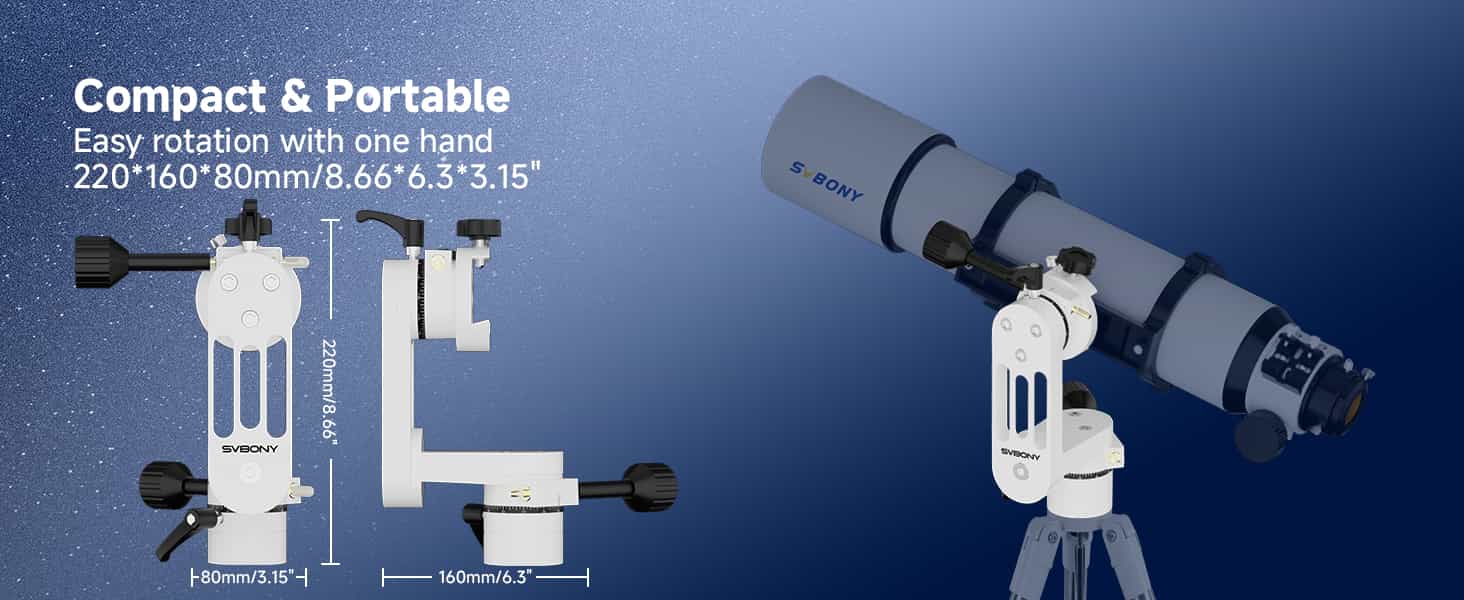
Alt-azimuth mounts are among the simplest and most beginner-friendly telescope mounts available. They move in two directions — up and down (altitude) and left to right (azimuth). This natural movement makes them easy to understand and operate.
Many beginner refractor telescopes use simple alt-azimuth mounts because they are lightweight, portable and quick to set up. They work well for observing the Moon, planets and brighter deep sky objects.
Advantages of Alt-Azimuth Mounts
- Simple and easy for beginners to use
- Lightweight and portable
- Quick setup with minimal adjustment
- Ideal for casual stargazing
Disadvantages of Alt-Azimuth Mounts
- Objects require constant manual adjustment
- Less suitable for long exposure astrophotography
- Can become difficult at very high magnifications
For beginners who mainly want to enjoy casual observing sessions, alt-azimuth mounts are often an excellent starting point.
Equatorial Mounts
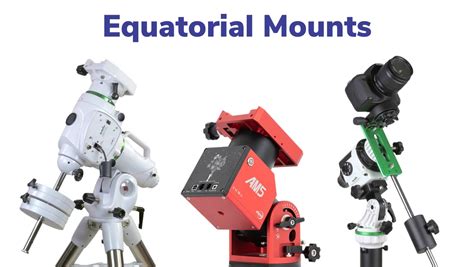
Equatorial mounts are designed specifically to follow the movement of the night sky more accurately. Unlike alt-azimuth mounts, an equatorial mount aligns with the Earth’s rotational axis. Once properly polar aligned, the telescope can track celestial objects smoothly using a single slow-motion control.
Many beginner reflector telescopes are supplied with German equatorial mounts, although they can initially appear more complicated to new astronomers. Understanding the differences between refractor vs reflector telescopes can also help beginners choose the right setup.
Equatorial mounts are popular for planetary observing and astrophotography because they make tracking objects much easier at higher magnifications.
Many beginner reflector telescopes are supplied with German equatorial mounts, although they can initially appear more complicated to new astronomers.
Advantages of Equatorial Mounts
- Excellent for tracking planets and stars
- Better suited for astrophotography
- Smooth movement at high magnification
- Accurate object tracking once aligned
Disadvantages of Equatorial Mounts
- More complex for beginners
- Heavier and less portable
- Requires polar alignment
- Longer setup time
Although equatorial mounts have a steeper learning curve, many serious astronomy enthusiasts appreciate their precision and tracking ability.
Dobsonian Mounts
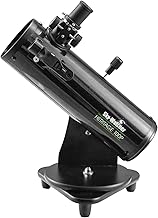
Compact tabletop Dobsonian telescope for beginner stargazing
Dobsonian mounts are a simplified form of alt-azimuth mount designed primarily for large reflector telescopes. They are known for their stability, affordability and ease of use.
Dobsonian telescopes are extremely popular for deep sky observing because they allow large apertures at relatively low cost. They are ideal for exploring many of the objects discussed in our guide to what you can see with a telescope.
Dobsonian telescopes are extremely popular for deep sky observing because they allow large apertures at relatively low cost. Many beginners choose Dobsonian telescopes because they offer impressive light gathering power without requiring complicated setup procedures.
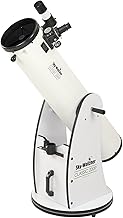
Large Dobsonian telescope for deep sky observing
Advantages of Dobsonian Mounts
- Very stable design
- Excellent for large reflector telescopes
- Affordable for larger apertures
- Simple and beginner friendly
- Excellent for deep sky observing
Disadvantages of Dobsonian Mounts
- Bulky and less portable
- Not ideal for astrophotography
- Manual tracking required
For visual astronomy and deep sky exploration, Dobsonian mounts are often considered one of the best choices for beginners.
Which Telescope Mount Is Best for Beginners?
The best telescope mount depends largely on what you want to observe and how you plan to use your telescope.
- For casual stargazing: Alt-azimuth mounts are simple and easy to use.
- For planetary observing and tracking: Equatorial mounts provide smoother movement and accurate tracking.
- For deep sky viewing: Dobsonian mounts offer excellent stability and large apertures at affordable prices.
- For astrophotography: Equatorial mounts are generally the preferred choice.
Beginners should also consider portability, setup time and storage space when choosing a mount. A telescope that is quick and easy to set up will often get used far more frequently than a complicated system that feels difficult to manage.
Final Thoughts
Choosing the right telescope mount is just as important as choosing the telescope itself. A stable, easy-to-use mount can make astronomy far more enjoyable and help beginners gain confidence while exploring the night sky.
Whether you choose an alt-azimuth mount for simplicity, an equatorial mount for accurate tracking or a Dobsonian mount for deep sky observing, understanding the strengths and limitations of each design will help you select the best setup for your astronomy journey.
Once you have chosen the right mount, upgrading to the best telescope eyepieces for beginners can further improve your viewing experience.
If you are new to astronomy, our complete Beginner Astronomy Guide provides additional tips for choosing equipment and getting started with stargazing.