Choosing between a Dobsonian vs refractor telescope is one of the biggest decisions beginner astronomers face. Both telescope types are excellent for stargazing, but each has its own strengths, weaknesses and ideal uses.
Some beginners prefer the simplicity and low maintenance of refractor telescopes, while others are drawn to the powerful deep sky performance offered by Dobsonian reflectors. The right choice often depends on your budget, observing interests and how portable you need your telescope to be.
In this guide, we’ll compare Dobsonian vs refractor telescopes and help you decide which type is best for your astronomy journey.
If you are completely new to astronomy, you may also want to read our guides on How To Choose Your First Telescope and Best Beginner Telescopes For Astronomy.

A standard Dobsonian telescope
What Is A Dobsonian Telescope?
A Dobsonian telescope is a type of reflector telescope mounted on a simple alt-azimuth base. Dobsonians are popular because they provide large apertures at relatively affordable prices.
Dobsonian telescopes use mirrors rather than lenses to gather light.
Advantages of Dobsonian telescopes include:
- Excellent deep sky performance
- Large aperture for the price
- Simple design
- Stable mounting system
Dobsonian telescopes are especially popular among visual observers who enjoy viewing galaxies, nebulae and star clusters.
What Is A Refractor Telescope?
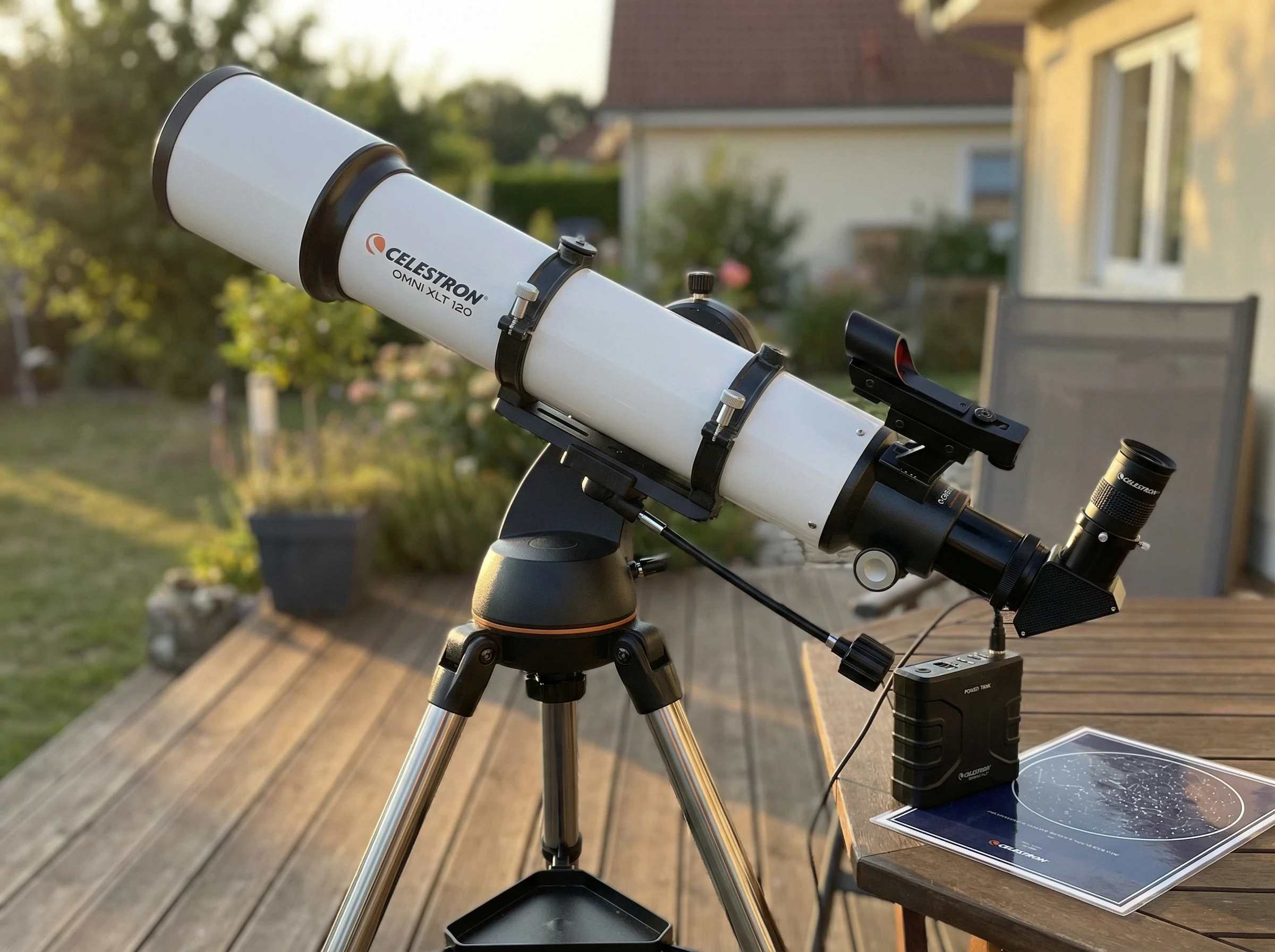
Refractor telescopes use glass lenses to gather and focus light. They are often considered one of the easiest telescope types for beginners to use.
Advantages of refractor telescopes include:
- Low maintenance
- Sharp planetary views
- Simple setup
- Portable designs
Refractors are particularly good for observing the Moon, planets and brighter celestial objects.
Dobsonian vs Refractor: Key Differences
Aperture
Dobsonian telescopes usually offer significantly larger apertures for the same price compared to refractors.
Larger aperture means:
- Better light gathering
- Brighter deep sky views
- More visible detail
This makes Dobsonians extremely attractive for deep sky astronomy.
Portability
Refractor telescopes are often smaller and easier to transport, especially beginner models.
Dobsonian telescopes can become bulky as aperture increases, although smaller tabletop Dobsonians remain highly portable.
Maintenance
Refractors require very little maintenance.
Dobsonian reflectors occasionally require collimation, which means aligning the mirrors correctly for sharp images.
Many beginners initially find refractors simpler because of this.
Viewing Style
Dobsonian telescopes are often preferred for:
- Deep sky observing
- Dark sky locations
- Visual astronomy
Refractors are often preferred for:
- Planetary viewing
- Lunar observing
- Quick setup sessions
Which Is Better For Beginners?
There is no single perfect answer because it depends on what type of astronomy interests you most.
Choose A Dobsonian If You Want:
- The best value for aperture
- Deep sky performance
- Bright nebula and galaxy views
- A long-term telescope
Choose A Refractor If You Want:
- Easy setup and portability
- Minimal maintenance
- Sharp lunar and planetary views
- A lightweight telescope
For many beginners, small refractors are easier to start with, while Dobsonians often provide more impressive long-term viewing performance.
Planetary Viewing
Both telescope types can provide excellent planetary views.
Refractors are known for producing very sharp and high-contrast images of:
- The Moon
- Jupiter
- Saturn
- Mars
Dobsonian telescopes can also provide excellent planetary views, especially larger aperture models.
Deep Sky Viewing
Dobsonian telescopes generally perform better for deep sky astronomy because their larger mirrors gather more light.
This improves views of:
- Galaxies
- Nebulae
- Globular clusters
- Fainter celestial objects
If deep sky observing is your main goal, a Dobsonian is often the stronger choice.
Price Comparison
Dobsonian telescopes usually provide more aperture for your money compared to refractors.
For example:
- A beginner refractor may offer 70mm–100mm aperture
- A beginner Dobsonian may offer 130mm–200mm aperture at similar prices
This is one reason Dobsonians are considered one of the best values in amateur astronomy.
Accessories Worth Considering
Both Dobsonian and refractor telescopes benefit from useful astronomy accessories.
Popular upgrades include:
- Additional eyepieces
- Moon filters
- Red flashlights
- Dew heaters
- Telescope carry cases
You can also browse our guides to telescope eyepieces and astronomy accessories.
Frequently Asked Questions
Are Dobsonian Telescopes Good For Beginners?
Yes. Dobsonian telescopes are often considered one of the best beginner telescope types because they provide excellent viewing performance for the price.
Are Refractor Telescopes Easier To Use?
Generally, yes. Refractors are simple to maintain and quick to set up.
Which Telescope Type Is Better For Planets?
Both can perform very well, although refractors are often praised for their sharp planetary contrast.
Which Telescope Type Is Better For Deep Sky Objects?
Dobsonian telescopes usually perform better for deep sky viewing because of their larger apertures.
Final Thoughts
The Dobsonian vs refractor telescope debate ultimately comes down to personal preference and observing goals. Both telescope types can provide incredible views of the night sky and introduce beginners to the wonders of astronomy.
If portability and simplicity matter most, a refractor telescope may be the better choice. If deep sky performance and aperture are your priorities, a Dobsonian telescope is difficult to beat.
You may also want to explore our guides to beginner telescopes, what you can see with a telescope and beginner telescope eyepieces.