Partial Lunar Eclipse – 28 August 2026
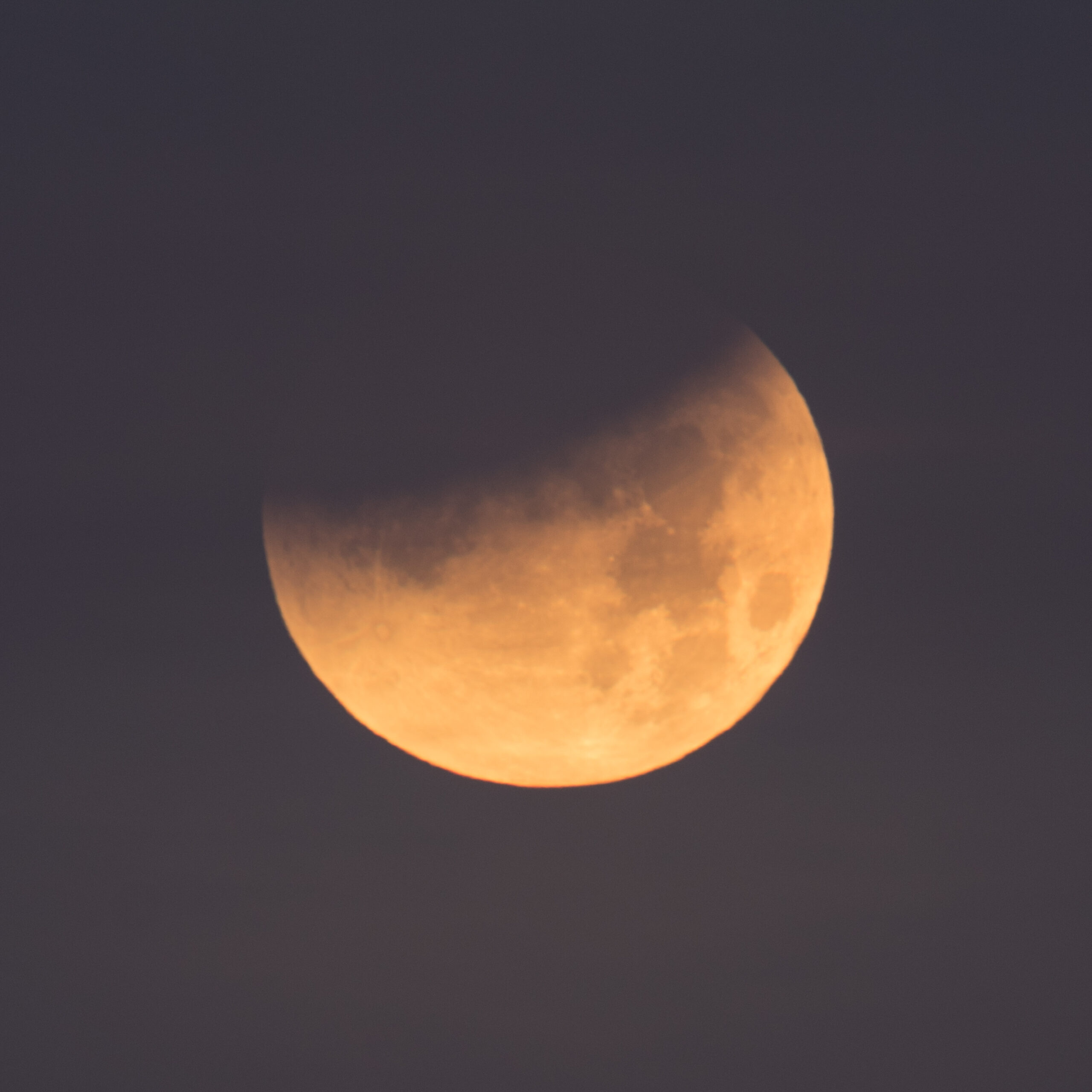
During the early hours of Friday, 28 August 2026, observers across the United Kingdom will have an opportunity to watch a deep partial lunar eclipse. At greatest eclipse, approximately 93% of the Moon’s diameter will be covered by the darkest part of Earth’s shadow.
The eclipse will take place low in the western sky before sunrise. The Moon will set while the eclipse is still in progress, making a clear western horizon particularly important for UK observers.
Partial Lunar Eclipse at a Glance
- Date: Friday, 28 August 2026
- Visible from: The United Kingdom
- Penumbral phase begins: Approximately 02:24 BST
- Partial phase begins: Approximately 03:34 BST
- Greatest eclipse: Approximately 05:13 BST
- Umbral magnitude: Approximately 0.93
- Approximate moonset: Around 06:20 BST, depending on location
- Special equipment required: None
Lunar Eclipses Are Safe to Observe
Unlike a solar eclipse, a lunar eclipse is completely safe to observe with the naked eye. You do not need eclipse glasses, solar filters or any other protective viewing equipment.
Binoculars and telescopes can provide a closer view, but they are optional and may be used normally.
What Is a Partial Lunar Eclipse?
A lunar eclipse occurs when the Sun, Earth and Moon become closely aligned, allowing the Moon to pass through Earth’s shadow. This can only happen at Full Moon, when the Moon is positioned on the opposite side of Earth from the Sun.
Earth’s shadow has two principal parts. The pale outer region is called the penumbra, while the much darker central region is known as the umbra.
During a penumbral eclipse, the Moon passes only through the lighter outer shadow. The resulting dimming can be subtle and may initially be difficult to detect.
A partial lunar eclipse begins when part of the Moon enters the umbra. The dark shadow then appears to move slowly across the lunar surface.
On 28 August 2026, approximately 93% of the Moon’s diameter will enter the umbra at maximum eclipse. A narrow portion of the Moon will remain outside the darkest shadow, preventing the eclipse from becoming total.
UK Eclipse Timetable
The timetable below uses British Summer Time. The quoted altitudes and moonset time are approximate and will vary depending on the observer’s location in the United Kingdom.
| Eclipse Stage | BST | UT | Approximate Altitude | What Happens |
|---|---|---|---|---|
| First penumbral contact | 02:24 | 01:24 | Around 24° | The Moon begins entering Earth’s pale outer shadow. |
| First umbral contact | 03:34 | 02:34 | Around 19° | The Moon begins entering the dark umbra, and the main partial eclipse starts. |
| Greatest eclipse | 05:13 | 04:13 | Around 8° | Approximately 93% of the Moon’s diameter is covered by Earth’s umbral shadow. |
| Moonset | Around 06:20 | Around 05:20 | 0° | The Moon sets while the partial eclipse is still in progress. |
What Will UK Observers See?
The first stage of the eclipse will be relatively subtle. At approximately 02:24 BST, the Moon will begin entering Earth’s penumbral shadow. At first, there may be little obvious change.
As the Moon moves farther into the penumbra, one side of the lunar disc may begin to look slightly duller or greyer than the other. The effect usually becomes easier to notice as the start of the partial phase approaches.
At approximately 03:34 BST, the Moon will begin entering Earth’s dark umbral shadow. A distinct curved shadow should then become visible along one edge of the Moon.
Over the following hour and a half, the umbra will spread steadily across the lunar surface. Familiar features such as the bright lunar highlands and dark maria will gradually disappear into the shadow.
Greatest eclipse occurs at approximately 05:13 BST. By then, the Moon will be only around 8 degrees above the horizon from a representative UK location. Approximately 93% of its diameter will be inside the umbra.
The Moon will then continue moving towards the western horizon and will set before it has emerged from Earth’s shadow.
Will the Moon Turn Red?
A totally eclipsed Moon is often called a Blood Moon because it can take on a copper, orange or deep red appearance. This happens because sunlight passing through Earth’s atmosphere is filtered and bent into the planet’s shadow.
Blue light is scattered more strongly by Earth’s atmosphere, while more of the red and orange light continues through and reaches the lunar surface.
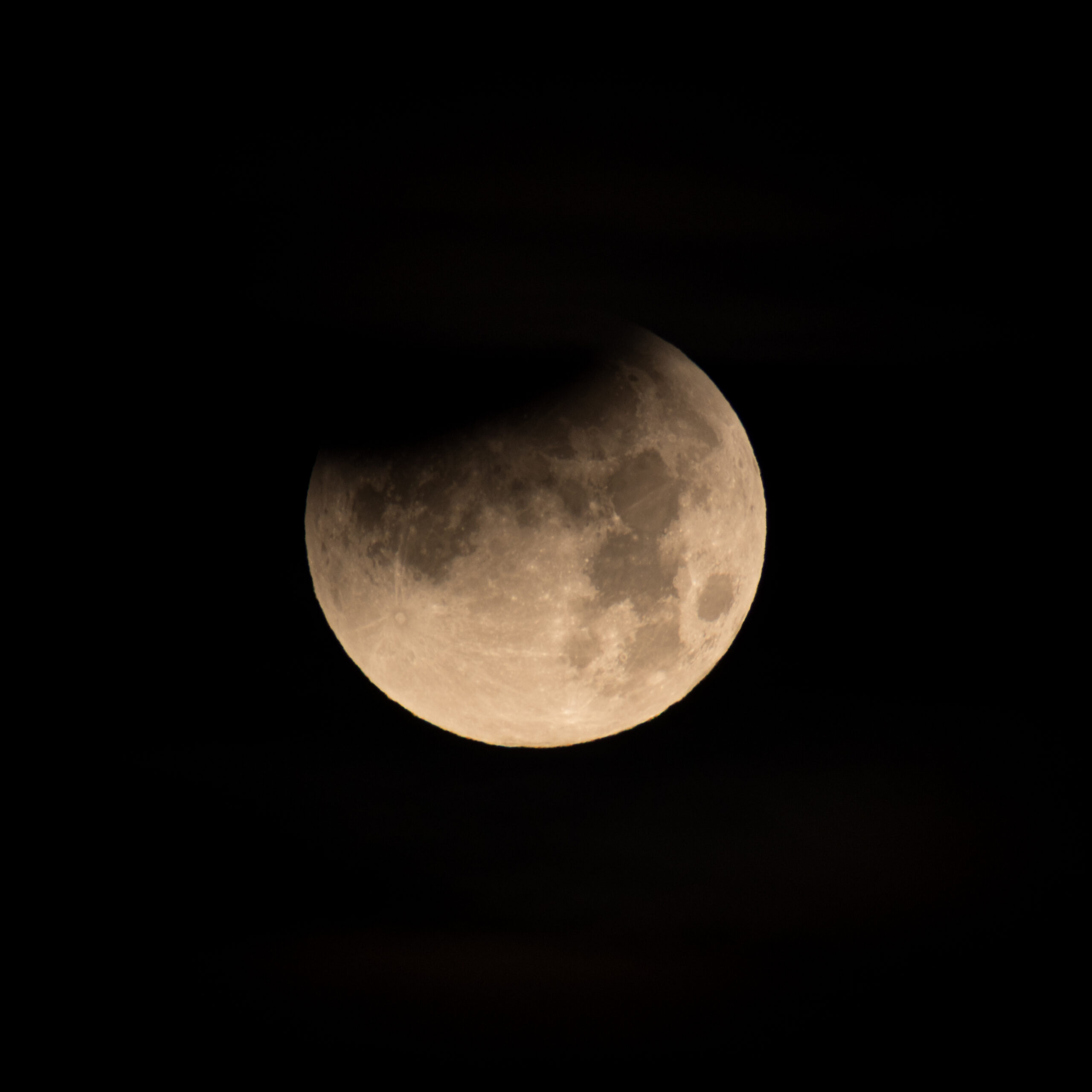
This eclipse will not become total, but the deeply eclipsed part of the Moon may still display copper, brown, orange or reddish colouring. The exact appearance will depend partly on atmospheric conditions around Earth.
Because a thin portion of the Moon will remain directly illuminated, observers may see a striking contrast between the bright uneclipsed edge and the much darker eclipsed area.
Choosing a Viewing Location
The most important requirement for this eclipse is a clear, unobstructed view towards the west or west-southwest.
At the beginning of the event, the Moon will be reasonably well placed, but it will move progressively lower as the eclipse develops. By greatest eclipse, it will be close to the horizon.
Buildings, hills, trees and other obstructions could hide the Moon during the most dramatic part of the event. Try to find an observing location with a low western horizon.
An open field, elevated viewpoint, coastline or west-facing hill may provide a suitable view. Visit the location during daylight beforehand so that you can identify hazards and confirm that the horizon is clear.
Do You Need Any Equipment?
No specialist equipment is required to observe a lunar eclipse. The complete event can be followed safely with the naked eye.
Binoculars can improve the view by making the edge of Earth’s shadow and the changing colours of the Moon easier to see. A small telescope can reveal how individual craters, mountain ranges and lunar seas disappear into the umbra.
Because the Moon will be low in the sky, atmospheric turbulence may make highly magnified telescope views less steady than usual. Low or moderate magnification will probably provide the clearest and most attractive view.
A reclining chair, warm clothing and a flask containing a hot drink may make the early-morning observing session more comfortable.
Photographing the Partial Lunar Eclipse
Lunar eclipses are much easier and safer to photograph than solar eclipses. No solar filter is required because the camera is recording reflected sunlight from the Moon rather than looking directly at the Sun.
Using a Smartphone
A smartphone can record the Moon, although the lunar disc may appear quite small when using the standard camera lens. Use optical zoom where available rather than excessive digital zoom, which can reduce image quality.
Support the phone against a solid object or use a tripod and phone adapter. Tap the Moon on the screen to focus and reduce the exposure if the bright portion appears as a featureless white circle.
Using a Camera
A DSLR or mirrorless camera fitted with a telephoto lens will provide a larger image of the Moon. Mount the camera on a solid tripod and use a remote shutter release or short self-timer to reduce vibration.
Exposure settings will need to change as more of the Moon enters Earth’s shadow. The bright uneclipsed portion will need a shorter exposure, while the dark eclipsed area may require a slower shutter speed or higher ISO setting.
Take several photographs at different exposure settings rather than relying on a single image. This technique, known as exposure bracketing, increases the chance of recording both the bright and shadowed parts successfully.
Photographing Through a Telescope
A smartphone adapter can be used to hold a phone steadily over a telescope eyepiece. Cameras may also be attached to suitable telescopes using the correct adapter.
Practise focusing and attaching the equipment before eclipse morning. Trying to learn an unfamiliar camera or adapter in darkness can cause valuable observing time to be lost.
The Challenge of a Low-Altitude Eclipse
The low altitude of the Moon will be one of the defining features of this eclipse for UK observers.
Looking through a greater thickness of Earth’s atmosphere may cause the Moon to appear more yellow, orange or red than it would when high in the sky. Atmospheric haze may also soften fine lunar detail.
However, the low position of the Moon could create excellent photographic opportunities. Trees, buildings, hills or distant landmarks can be included in the foreground to show the scale and position of the eclipsed Moon.
The approaching dawn will gradually brighten the sky as the Moon moves closer to the horizon. Observers should therefore begin watching well before greatest eclipse rather than waiting until 05:13 BST.
Weather and Preparation
As with every astronomical event seen from the UK, cloud cover will determine whether the eclipse is visible.
Check several weather forecasts during the days leading up to the event. If conditions appear poor at home, a short journey may place you beneath clearer skies.
Prepare binoculars, telescopes, cameras, batteries and memory cards before going to bed. Set an alarm early enough to reach your observing site and allow your eyes to adjust before the penumbral phase begins.
Dew can form on optical equipment during a long observing session. Keep lens caps fitted until the equipment is needed, and carry a clean, dry cloth for wiping moisture from the outside of cases and tripods. Avoid rubbing optical surfaces.
Partial Lunar Eclipse Viewing Checklist
- Choose a location with a clear western horizon.
- Check the weather forecast before travelling.
- Set an alarm well before 02:24 BST.
- Prepare binoculars, telescope or camera in advance.
- Charge batteries and clear space on memory cards.
- Wear warm clothing suitable for an early-morning observing session.
- Begin observing before the partial phase starts at approximately 03:34 BST.
- Remember that the Moon will be very low by greatest eclipse at approximately 05:13 BST.
- No eclipse glasses or solar filters are required.
Final Thoughts
The partial lunar eclipse of 28 August 2026 will require an early start, but it promises to be one of the most impressive lunar events visible from the United Kingdom during the year.
With approximately 93% of the Moon entering Earth’s dark umbral shadow, the eclipse will come very close to totality. The combination of a deeply eclipsed Moon, possible copper-red colouring and a low western horizon could create a memorable sight.
No specialist equipment is needed. A clear sky, a suitable viewing location and a willingness to rise before dawn are enough to enjoy the event.