
The Apollo programme holds a special place in the history of exploration. It was far more than a race to plant a flag on another world. It was a story of ambition, engineering, tragedy, courage, scientific discovery and extraordinary teamwork.
In less than a decade, NASA went from learning whether humans could survive in space to landing astronauts on the Moon. Between 1968 and 1972, Apollo sent crews around the Moon, tested the spacecraft and techniques needed for landing, and ultimately placed twelve astronauts on the lunar surface.
The achievement still feels remarkable today.
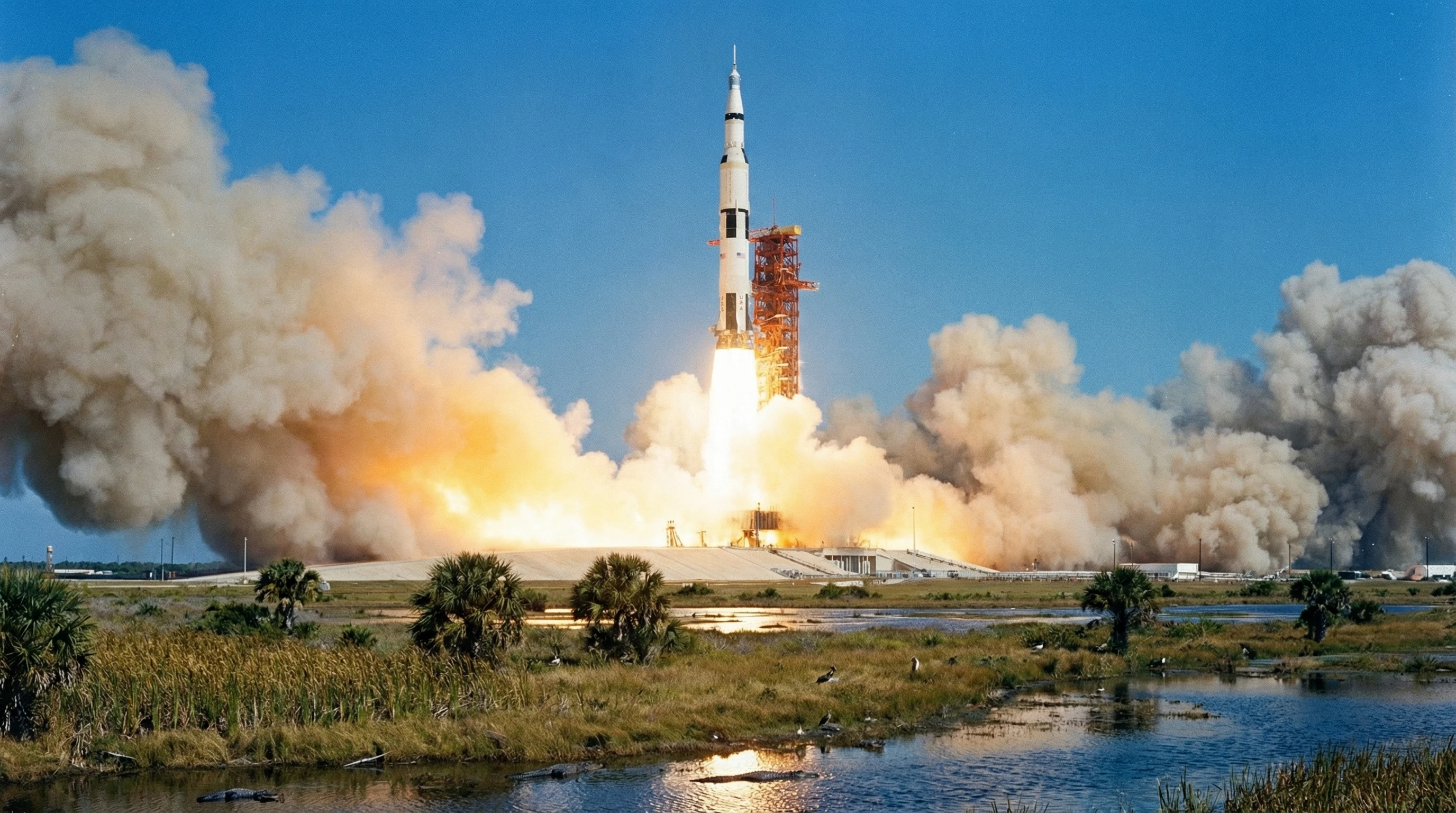
Kennedy’s Challenge
In 1961, President John F. Kennedy set the United States an extraordinary objective: land a man on the Moon and return him safely to Earth before the end of the decade.
At the time, NASA had only just begun sending Americans into space. The technology required for a lunar landing did not yet exist.
Apollo therefore grew out of two earlier programmes.
Mercury answered some of the most basic questions. Could humans survive launch, weightlessness and re-entry?
Gemini then developed the skills Apollo would need: longer-duration flights, spacewalking, manoeuvring spacecraft, rendezvous and docking.
By the time Apollo began flying crews, NASA had spent years building the foundations beneath it.
Apollo 1: Tragedy Before Flight
Apollo suffered its greatest tragedy before a crewed Apollo spacecraft ever reached space.
On 27 January 1967, astronauts Virgil “Gus” Grissom, Ed White and Roger Chaffee were taking part in a ground test inside their command module when a fire broke out.
All three men died.
The accident led NASA to reassess the spacecraft, its materials, wiring, hatch design and operating procedures. The command module was extensively redesigned before another crew flew.
Apollo 1 became a painful reminder that exploration carries risks — and that those risks have to be understood rather than ignored.
Apollo 7: Returning Apollo to Flight
Apollo 7 launched in October 1968.
It was the first crewed flight of the Apollo programme and tested the redesigned Command and Service Module in Earth orbit.
Over almost eleven days, the crew demonstrated that the spacecraft could operate successfully in space.
After Apollo 1, that successful mission restored confidence.
Apollo 8: Humans Reach the Moon
Apollo 8 changed everything.
In December 1968, Frank Borman, Jim Lovell and William Anders became the first humans to leave low Earth orbit and travel to the Moon.
They did not land. Instead, they entered lunar orbit and travelled around the Moon ten times.
For the first time, human beings saw the far side of the Moon with their own eyes.
They also saw something equally extraordinary: Earth rising above the lunar horizon.
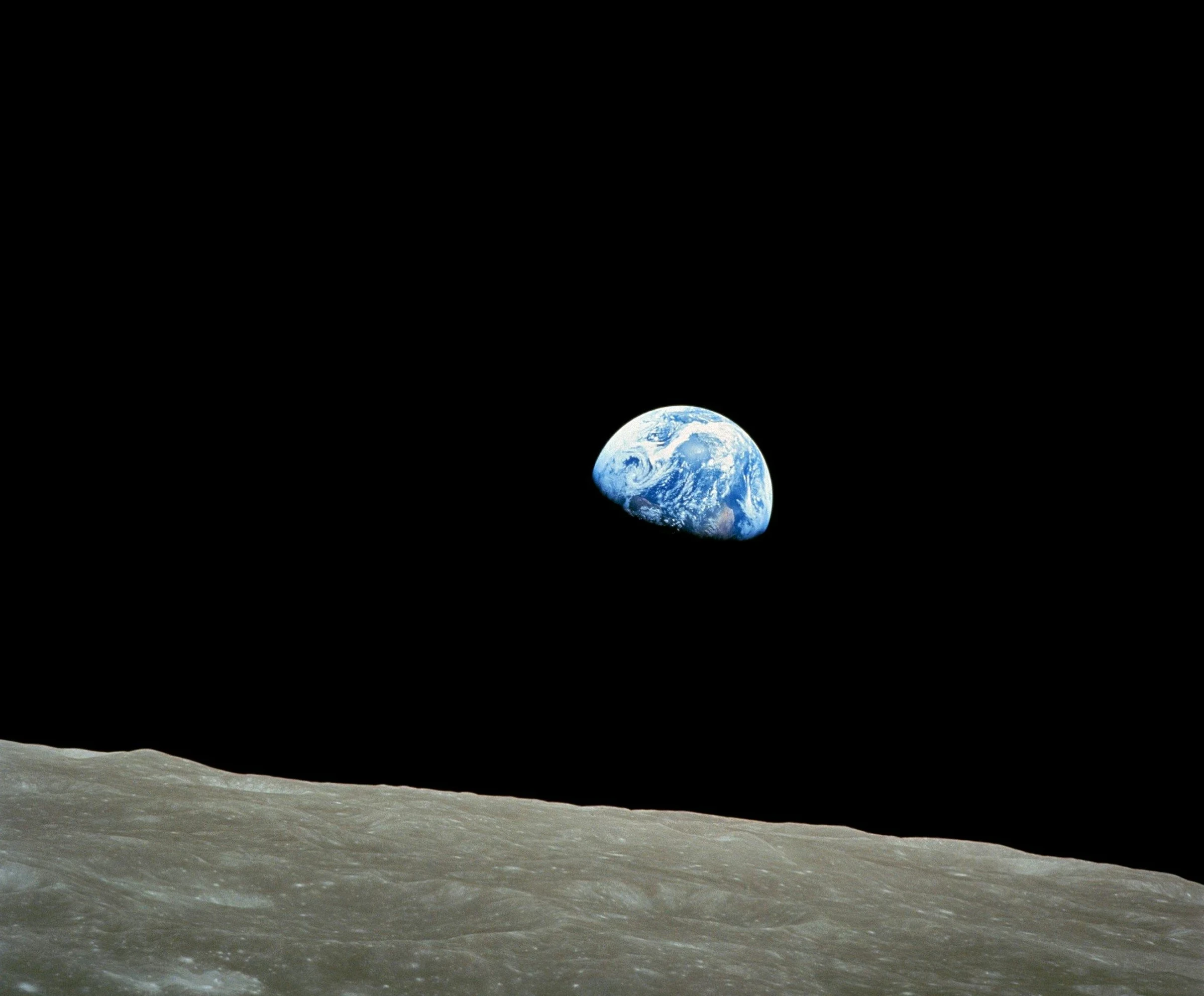
The famous Earthrise photograph became one of the defining images of the space age — a small blue world hanging above the grey lunar landscape.
Apollo 9: Testing the Lunar Module
Apollo 9 stayed in Earth orbit, but its mission was essential.
For the first time, astronauts flew the complete Apollo spacecraft configuration, including the Lunar Module.
The crew separated the Lunar Module from the Command Module, flew it independently and then rendezvoused and docked again.
Those procedures would later have to work around the Moon, where failure could leave astronauts stranded.
Apollo 10: The Dress Rehearsal
Apollo 10 was effectively a full rehearsal for the first Moon landing.
In May 1969, astronauts Thomas Stafford, John Young and Eugene Cernan flew to the Moon.
Stafford and Cernan entered the Lunar Module and descended to about 47,400 feet — roughly nine miles — above the lunar surface.
They tested nearly every stage of the landing mission without actually touching down.
Once Apollo 10 returned safely, NASA was ready to attempt the real thing.
Apollo 11: The First Landing
On 20 July 1969, Neil Armstrong and Buzz Aldrin began their descent towards the Sea of Tranquillity while Michael Collins remained in lunar orbit aboard the Command Module Columbia.
The descent was far from uneventful.
The Lunar Module computer produced repeated 1201 and 1202 programme alarms. These indicated that the computer was temporarily overloaded with more tasks than it could process. Mission Control determined that the guidance computer was still carrying out its essential work, and the crew were told to continue.
Then another problem appeared.
The computer was guiding Eagle towards a rough, boulder-strewn area near a large crater.
At roughly 600 feet above the surface, Armstrong took manual control of the final descent and flew beyond the hazardous ground in search of a safer landing site.
Moments later came the famous words:
“Houston, Tranquillity Base here. The Eagle has landed.”
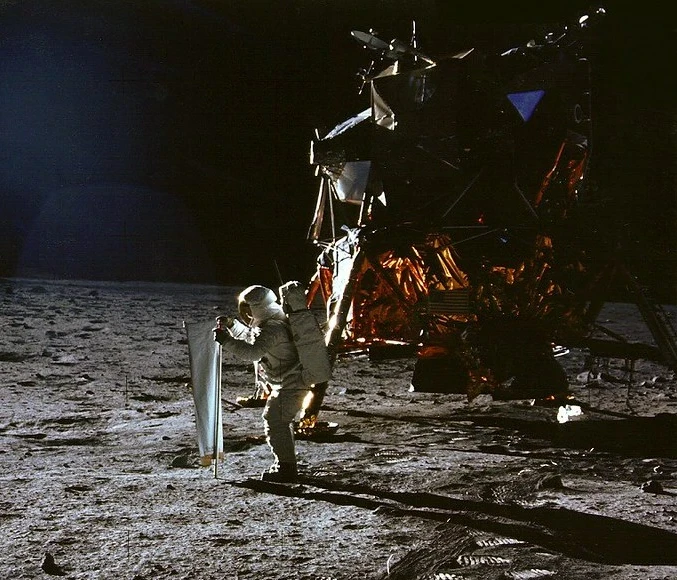
Armstrong became the first human to step onto the Moon, followed shortly afterwards by Aldrin.
The achievement fulfilled Kennedy’s challenge with months to spare.

Apollo 12: Proving It Was Repeatable
Apollo 12 landed in November 1969.
Where Apollo 11 had demonstrated that a lunar landing was possible, Apollo 12 demonstrated something equally important: NASA could land accurately.
Pete Conrad and Alan Bean touched down close to the robotic Surveyor 3 spacecraft, which had landed on the Moon more than two years earlier.
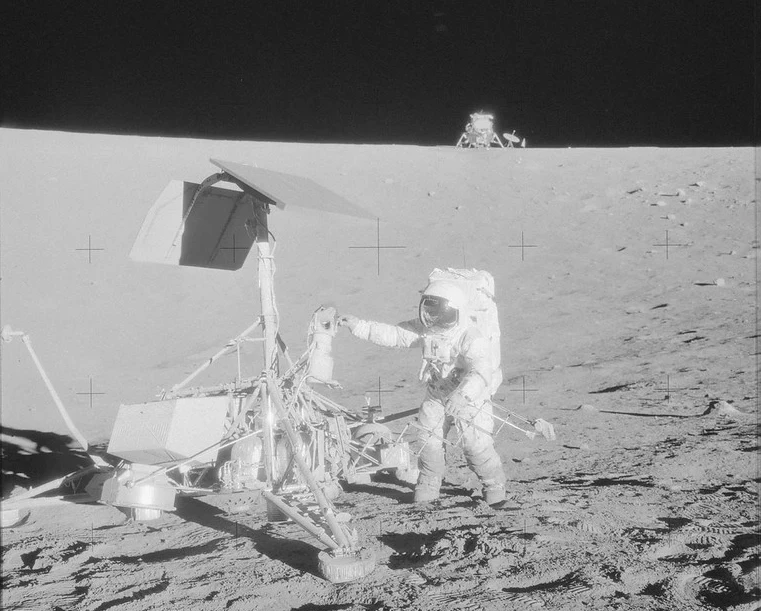
The astronauts visited Surveyor, photographed it and removed components for return to Earth.
Precision lunar landing was becoming a reality.
Apollo 13: Survival Instead of Landing
Apollo 13 never reached the lunar surface.
On the way to the Moon, an oxygen tank exploded in the spacecraft’s Service Module.
The planned landing was abandoned immediately.
The Lunar Module, designed primarily to carry two astronauts down to the Moon and back, became a lifeboat for the crew.
Astronauts Jim Lovell, Fred Haise and Jack Swigert worked with Mission Control to conserve electrical power, oxygen and water while engineers on Earth developed emergency procedures.
Apollo 13 looped around the Moon and returned safely to Earth.
The mission became famous not because it achieved its original objective, but because a potentially fatal emergency was overcome through discipline, engineering and teamwork.
Apollo 14: Back to the Moon
Apollo 14 returned NASA to the lunar surface in early 1971.
Alan Shepard and Edgar Mitchell explored the Fra Mauro region and carried out scientific experiments while collecting lunar material.
Shepard also became famous for hitting two golf balls on the Moon.
It was an entertaining moment, but the mission itself marked Apollo’s return to successful lunar exploration after the drama of Apollo 13.
Apollo 15: The Lunar Rover Arrives
Apollo 15 represented a change in emphasis.
The later Apollo flights were designed to spend longer on the Moon and carry out much more extensive science.
Apollo 15 became the first mission to use the Lunar Roving Vehicle.
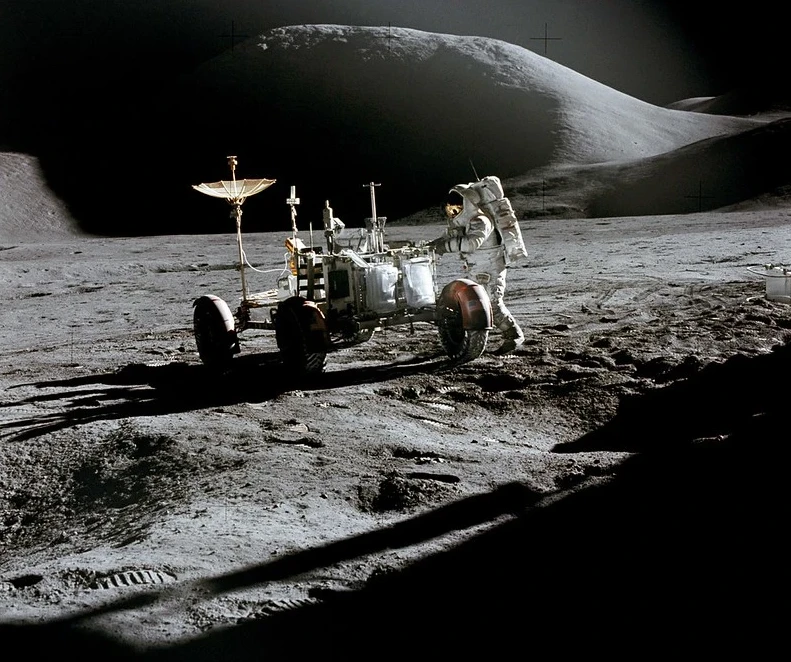
David Scott and James Irwin could now travel kilometres from their Lunar Module instead of exploring only on foot.
They investigated the Hadley-Apennine region, travelled alongside Hadley Rille and collected a remarkable range of geological samples.
One of the best known was the Genesis Rock, an ancient piece of lunar crust that helped scientists investigate the Moon’s earliest history.
The rover transformed what astronauts could accomplish on the lunar surface.
Apollo 16: Exploring the Lunar Highlands
Apollo 16 landed in the Descartes Highlands in April 1972.
John Young and Charles Duke used the lunar rover to explore terrain very different from the dark volcanic plains visited by several earlier missions.
Their work helped scientists understand that the lunar highlands had a complex history shaped largely by impacts rather than the type of volcanism some researchers had expected.
Apollo was becoming as much a programme of field geology as one of exploration.
Apollo 17: The Final Apollo Moon Landing
Apollo 17 landed in the Taurus-Littrow valley in December 1972.
It became the final crewed lunar landing of the Apollo era.
Commander Eugene Cernan was joined on the surface by Harrison “Jack” Schmitt, the first professional geologist to walk on the Moon.
During their second lunar excursion, Schmitt spotted something unexpected near Shorty Crater:
orange soil.
The material contained tiny glass beads produced by ancient volcanic activity.
The discovery provided another clue to the Moon’s complicated geological history.
Apollo 17 also returned more lunar material than any previous Apollo mission.
When Cernan climbed back into the Lunar Module, he became the last person — so far — to walk on the Moon.
Why Apollo 18, 19 and 20 Never Flew
Apollo was originally expected to continue beyond Apollo 17.
But the political and financial circumstances that had driven the programme during the 1960s were changing.
The United States had already achieved Kennedy’s objective and won the race to land humans on the Moon. At the same time, NASA faced tighter budgets and competing priorities.
Apollo 20 was cancelled in 1970, with its Saturn V launch vehicle needed for the Skylab space station.
Later that year, budget reductions led to the cancellation of two additional lunar landing missions.
Apollo 18, 19 and 20 therefore never flew.
The hardware, astronauts and plans existed — but the political commitment to continue lunar landings did not.
What Apollo Taught Us About the Moon
Apollo was not simply a technological demonstration.
The astronauts returned hundreds of kilograms of lunar rocks, soil and core samples.
Those samples transformed our understanding of the Moon.
Scientists learned that the lunar surface records billions of years of impacts and volcanic activity.
Apollo samples also helped support the modern idea that the Moon formed after a giant collision between the young Earth and another planetary body very early in Solar System history.
Many Apollo samples continue to be studied today using scientific instruments that did not exist when the astronauts collected them.
Technology and Engineering
Apollo forced engineers to solve problems that had never existed before.
Spacecraft had to navigate hundreds of thousands of kilometres through space, support humans for days at a time, land on another world and then launch from it.
The Apollo Guidance Computer was particularly important.
Although tiny compared with modern computers, it was one of the pioneering applications of integrated circuits and had to operate reliably in an environment where failure could be fatal.
Apollo also accelerated developments in materials, telecommunications, navigation, life-support systems and systems engineering.
Perhaps its greatest technological legacy was not one individual invention, but the ability to coordinate enormously complicated projects involving thousands of people and organisations.
Can We See the Apollo Landing Sites Through a Telescope?
This is one of the questions beginners frequently ask.
Unfortunately, even a large amateur telescope cannot resolve the Lunar Modules, flags or rovers left on the Moon.
They are simply too small and too far away.
What you can see are the larger lunar regions where the missions landed.
- Sea of Tranquillity — Apollo 11
- Ocean of Storms — Apollo 12
- Fra Mauro — Apollo 14
- Hadley-Apennine — Apollo 15
- Descartes Highlands — Apollo 16
- Taurus-Littrow — Apollo 17
Knowing that people once stood within the landscape you are observing adds something special to lunar observing.
Frequently Asked Questions
How many Apollo missions landed people on the Moon?
Six missions successfully landed astronauts on the lunar surface: Apollo 11, 12, 14, 15, 16 and 17.
Twelve people walked on the Moon between July 1969 and December 1972.
Did every Apollo mission travel to the Moon?
No.
Apollo 7 remained in Earth orbit. Apollo 8 travelled to and orbited the Moon. Apollo 9 stayed in Earth orbit to test the Lunar Module. Apollo 10 went to the Moon and rehearsed the landing sequence without touching down. Apollo 13 travelled around the Moon after its landing was abandoned following the oxygen-tank explosion.
What happened to the Apollo 1 astronauts?
Gus Grissom, Ed White and Roger Chaffee died in a cabin fire during a ground test on 27 January 1967.
Their deaths resulted in extensive spacecraft redesign and safety improvements.
Did the astronauts leave equipment on the Moon?
Yes. Among the objects left behind are Lunar Module descent stages, scientific instruments, lunar rovers and other equipment.
The Apollo missions also deployed laser retroreflectors that are still used for extremely precise measurements of the distance between Earth and the Moon.
Why were lunar rovers important?
The Lunar Roving Vehicle dramatically increased the distance astronauts could travel from their landing site.
That allowed the later Apollo crews to explore a much larger variety of geological features and collect samples from locations they could never have reached safely on foot.
Why Apollo Still Matters
Apollo demonstrated something that had previously belonged to science fiction: humans could leave Earth, travel to another world, explore it and return safely.
But its real legacy is larger than footprints and flags.
Apollo showed how science, engineering and human courage could be combined to solve extraordinarily difficult problems.
It also changed our perspective.
The astronauts who travelled to the Moon looked back and saw Earth as a small, fragile world in the darkness of space.
More than half a century later, humans are preparing to return to the Moon.
When they do, they will be following a path first travelled by Apollo.
And when we look at the Moon through a telescope today, it is worth remembering that for a brief extraordinary period between 1969 and 1972, people really did walk there.