Ever since humans first looked towards the heavens, the Moon must have inspired curiosity and wonder. Night after night its appearance changes, progressing from a slender crescent through the quarter phases towards the Full Moon, before gradually diminishing again and beginning another cycle.
Early observers also noticed that the Moon did not always appear exactly the same size in the sky. We now know this is because its orbit around Earth is not a perfect circle, so its distance from us varies.
Long before spacecraft travelled there, observers gave names to the light and dark areas visible across its surface. The large dark plains became known as maria, from the Latin word for seas. Early astronomers believed these dark regions might actually contain water.
With the invention and development of the telescope, however, the Moon began to reveal its real landscape.
Astronomers discovered enormous impact craters, mountain ranges, broad plains, valleys and long narrow channels known as rilles. These features were gradually mapped, named and catalogued, and many of those names remain in use today.
You don’t need a large or expensive telescope to explore them for yourself.
In fact, the Moon is one of the best objects with which to begin astronomy.

How Do I Observe the Moon?
You can begin with nothing more than your eyes.
Watch the Moon over several evenings and you’ll soon become familiar with its changing phases. You’ll see the illuminated portion gradually increase as the Moon waxes towards Full Moon and then decrease as it wanes afterwards.
Binoculars reveal considerably more, while even a small telescope can transform the view.
Craters that were invisible to the naked eye suddenly appear. The differences between the brighter lunar highlands and darker maria become much clearer, and prominent craters such as Tycho and Copernicus become easy targets.
You may also begin to recognise some of the great lunar plains and mountain ranges.
⚠️ Solar Safety Warning
Never allow the Sun to enter an unfiltered telescope, binoculars or finder scope. Looking at the Sun through unfiltered optical equipment can cause permanent eye damage or blindness almost instantly. This is particularly important when looking for a very young crescent Moon, because the Moon will still appear relatively close to the Sun in the sky.
For beginners, I suggest waiting until around two or three days after New Moon, when the crescent is easier to find after sunset and farther from the Sun.
Look Along the Terminator
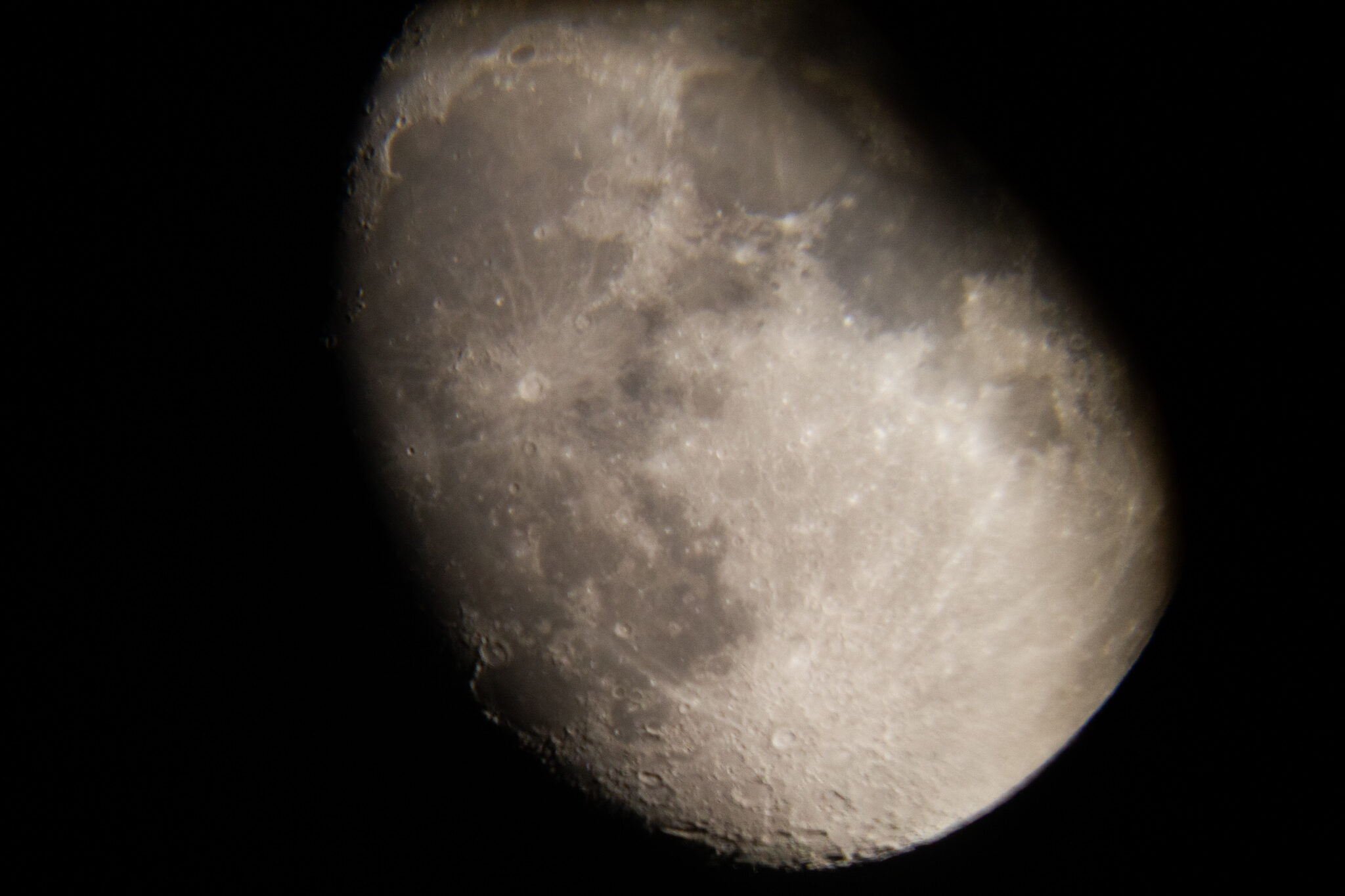
One of the most useful things to learn when observing the Moon is the terminator.
This is the boundary between the illuminated and unilluminated parts of the lunar surface — in other words, the dividing line between lunar day and night.
This is often where some of the finest detail can be seen.
Because sunlight strikes the surface at a low angle close to the terminator, mountains and crater walls cast long shadows. Those shadows emphasise the height and shape of the landscape and can make craters appear almost three-dimensional.
As the terminator moves across the lunar surface from one night to another, different features are brought into relief.
That means the Moon can provide a different observing experience every evening.
Is Full Moon the Best Time?
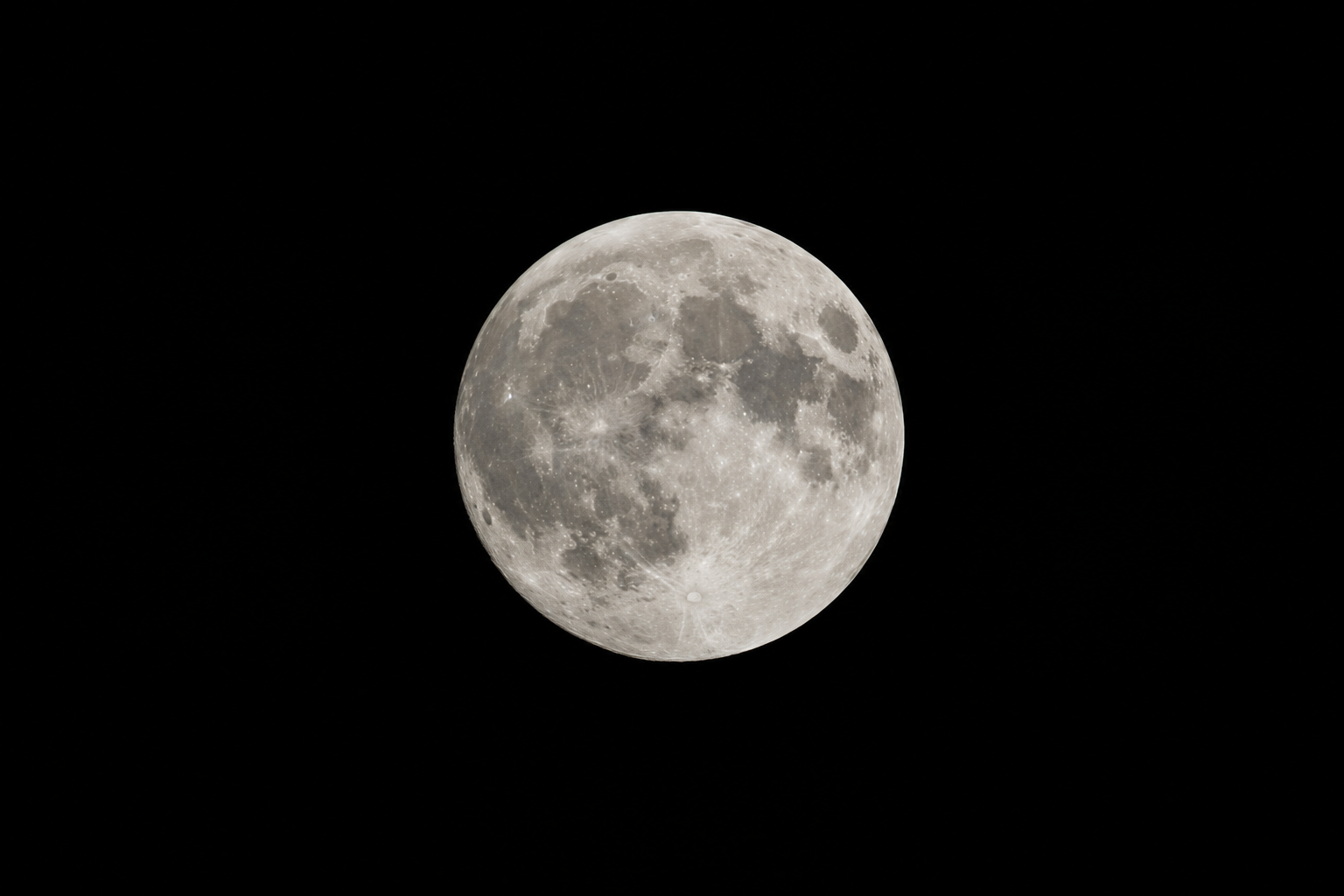
You might expect Full Moon to be the ideal time for lunar observing.
It certainly provides a spectacular view, and the differences between the bright highlands and dark maria are particularly obvious.
However, in my view it isn’t the best time for observing fine surface detail.
At Full Moon, sunlight is falling almost directly onto much of the surface that faces us. Shadows become much shorter, so craters and mountains can appear flatter.
For detailed visual observing, I much prefer the days before and after Full Moon, particularly when interesting features are close to the terminator.
That doesn’t mean you should ignore the Full Moon. Have a look and compare it with what you saw earlier in the month. Learning how the same landscape changes under different lighting is part of learning your way around the Moon.
Observing the Moon with Binoculars
Using binoculars to observe the Moon is, to me, much more exciting than simply looking with the naked eye.
And binocular astronomy can be wonderfully relaxing.
You can sit back in a deckchair or reclining garden chair, get yourself comfortable and spend time exploring the Moon without having to set up a telescope.
You’ll begin to distinguish some of the larger maria and prominent craters, and you’ll get a much stronger impression that you’re looking at a real world rather than a flat disc in the sky.
Your gaze may also wander elsewhere.
Put the binoculars down for a moment, look around the night sky, and you may find yourself exploring stars, clusters and constellations as well.
That’s one of the pleasures of observing — one object often leads you naturally to another.
Using a Telescope
The Moon is an excellent target for a small telescope.
Start with a low-power eyepiece.
This gives you a wider field of view and makes it easier to find the Moon and understand where individual features are located.
Once you’ve found something interesting, you can increase the magnification and take a closer look.
Don’t immediately reach for the highest-powered eyepiece you own.
You may be disappointed.
High magnification doesn’t automatically mean a better view. Atmospheric turbulence, the quality and aperture of the telescope and the observing conditions all affect how much useful magnification you can employ.
Some nights will support considerably more magnification than others.
So use the same rule that applies throughout visual astronomy:
Start at low power and gradually work upwards.
Stop when increasing the magnification no longer reveals additional detail.
Do I Need a Moon Filter?
A lunar filter isn’t essential, but it can be useful.
The Moon can appear surprisingly bright through a telescope, particularly when it is approaching Full Moon. A suitable lunar or neutral-density filter can reduce the brightness and make observing more comfortable.
A variable polarising filter is another option because it allows you to adjust the amount of light reaching your eye.
These filters are for comfort and contrast — you do not need the specialist solar filters required for observing the Sun.
Never confuse the two.
Use a Moon Map
One accessory I strongly recommend is a good Moon map or lunar atlas.
Rather than simply looking at craters, try identifying them.
- Find Copernicus.
- Find Tycho.
- Locate some of the major maria.
- Identify mountain ranges and valleys.
You could even keep a simple observing record and mark off the different features as you find them.
Write down the date, the phase of the Moon, the telescope or binoculars you used and anything interesting you noticed.
Over time you’ll build up your own record of exploring the lunar surface.
It’s a very good way to learn your way around our nearest neighbour.
Don’t Rush
Perhaps the most important advice I can give is simply to take your time.
You don’t have to identify dozens of craters during your first observing session.
Choose one or two features. Look at them carefully. Return the following evening and see how the changing angle of sunlight has altered their appearance.
The Moon isn’t going anywhere.
Month after month it gives us another opportunity to explore it.
And whether you’re using your eyes, a pair of binoculars or a telescope in the back garden, you’re looking across the same landscape that fascinated observers hundreds of years ago — and the same landscape upon which human beings eventually walked.
If you have any questions about observing the Moon, leave them in the comments below and I’ll try to answer them as best I can.
Clear skies.