Why Join an Astronomical Society? A Beginner’s Guide
Why join an astronomical society? When I first became interested in astronomy, like many beginners, I wanted to see everything.
I started with a pair of binoculars and later moved on to a small telescope. Suddenly the night sky began to reveal things I had previously only read about. I could explore the Moon, look for planets and begin discovering some of the brighter deep-sky objects.
But there was something missing.
I owned a telescope, but I didn’t really know my telescope. I was also still learning my way around the stars and constellations. None of my family was particularly interested in astronomy, and I didn’t have friends who shared the hobby.
At the time I was still young, so disappearing onto the South Downs at night to find darker skies was definitely out of the question. Astronomy information was also much harder to come by than it is today. There was no internet full of observing guides and videos, and the astronomy magazines available to me were limited and often expensive.
For a while, other things in life took over. Work, relationships and eventually marriage pushed astronomy somewhat into the background.
But the interest never really disappeared.
After I married, my enthusiasm for astronomy began to grow again. I started reading more and trying to learn more about the night sky.
And that was when I discovered astronomical societies.
What Is an Astronomical Society?
An astronomical society is, at its simplest, a group of people who share an interest in astronomy.
That simple description, however, doesn’t really convey what a good society can offer.
Its members may range from somebody who has only just bought their first pair of binoculars to observers who have spent decades studying the sky. Some may be primarily visual observers. Others might specialise in the Moon, planets, the Sun or deep-sky objects. Increasing numbers are interested in astrophotography.
The important thing is that they all share an enthusiasm for astronomy.
For a beginner, that pool of experience can be enormously valuable.
You Don’t Need to Be an Expert
One thing that can worry a beginner about attending an astronomical society for the first time is the thought:
“I don’t know enough about astronomy.”
That’s precisely why you should consider going.
You aren’t expected to arrive knowing the names of every constellation or understanding how every type of telescope works.
Everyone was a beginner once.
A good astronomical society should give you the opportunity to ask questions, learn from more experienced observers and gradually develop your own knowledge.
You may also discover that experienced astronomers are just as enthusiastic about showing somebody their first view of Saturn as they are about discussing more advanced subjects.
Meetings, Talks and Learning From Others
Many societies hold regular meetings where members or invited speakers give talks.
The subjects can cover almost every branch of astronomy: the Moon, planets, solar observing, deep-sky objects, cosmology, astronomical history and astrophotography, to name just a few.
You don’t have to understand everything immediately.
Simply listening to other astronomers talking about their interests can introduce you to areas of astronomy you may never previously have considered.
And unlike learning entirely from a book or website, there’s usually somebody there you can talk to afterwards.
Your First Star Party
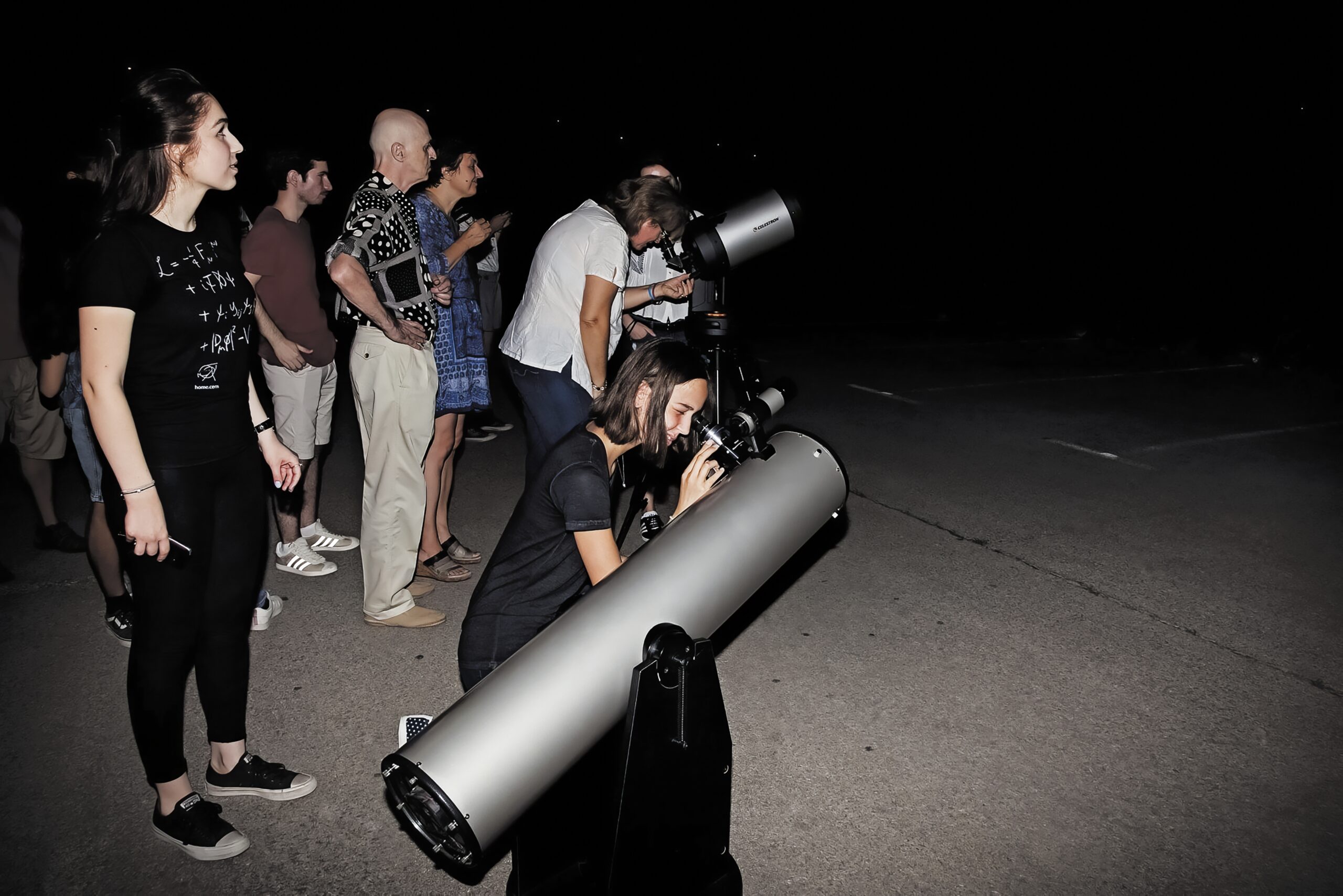
One of the great advantages of belonging to an astronomical society can be the opportunity to attend observing sessions or star parties.
These may take place at darker locations away from the worst effects of street lighting.
Members bring along their telescopes, binoculars and sometimes astrophotography equipment. For a beginner, this can be an eye-opening experience.
An object that appears as little more than a faint fuzzy patch through a small telescope might look very different through a larger instrument under a dark sky.
More importantly, you can talk to the person using that equipment.
You can ask why they chose that particular telescope, what eyepiece they’re using and how they located the object.
That experience can be particularly useful before buying more equipment. Looking through several different telescopes at a society observing night can teach you far more about what suits you than simply looking at photographs of telescopes online.
A Little Star-Party Etiquette
One Golden Rule: Never touch or adjust somebody else’s telescope or equipment without asking permission.
Astronomical equipment may have been carefully aligned, balanced and focused. Even a small adjustment can undo work that has taken the observer some time to complete.
Be particularly considerate around somebody carrying out astrophotography. Long exposures can be affected by vibration, and stray light can ruin an exposure.
The same consideration applies to everybody’s night vision.
Once your eyes have adapted to darkness, a bright white torch or phone screen can destroy that adaptation very quickly. Observers therefore commonly use dim red lights around an observing site.
If you’re uncertain about something, just ask. Most observers will be pleased that you did.
Try Equipment Before You Buy It
This is one of the benefits of joining a society that beginners can easily overlook.
When you’re starting out, telescope specifications can be confusing.
Should you buy a refractor or reflector? A Dobsonian or an equatorial mount? How large a telescope do you actually need? What difference does a particular eyepiece make?
At an observing session you may get the opportunity to see several completely different types of equipment being used in real conditions.
You might discover that the telescope you were planning to buy is too large for you to move comfortably.
Alternatively, you might discover that a relatively modest telescope shows considerably more than you expected.
Talking to people who actually use the equipment can help you make a much more informed decision.
Society Observatories
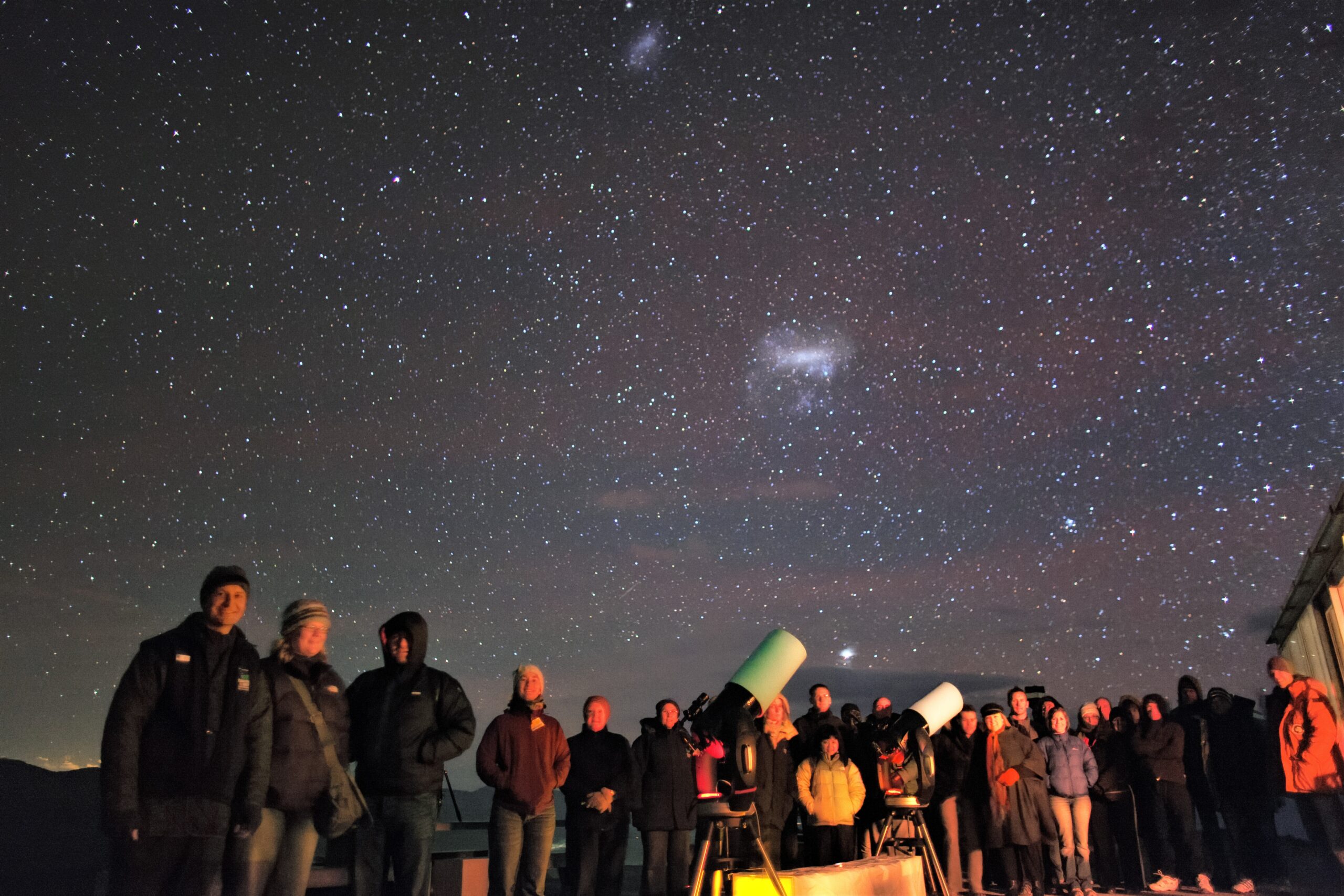
Some astronomical societies maintain their own observatory or have access to observing facilities.
These can range from relatively modest installations to permanent observatories housing substantial telescopes.
One of the largest society instruments I personally encountered was a 16-inch reflector.
Looking through a telescope of that size can be quite an experience if your previous observing has been through binoculars or a small beginner telescope.
Not every society has an observatory, of course, but where facilities are available they can give members access to equipment they might never realistically own themselves.
Borrowing Equipment
Some societies also maintain equipment that members can borrow.
Much of this equipment may have been donated by previous or existing members and can include binoculars, telescopes or accessories.
Availability naturally varies from one society to another, so it is worth asking your local group what facilities it offers.
For somebody unsure whether astronomy will become a long-term hobby, borrowing equipment can also provide valuable experience before spending a significant amount of money.
Astronomy Beyond the Meeting Room
Astronomical societies aren’t necessarily confined to monthly meetings and observing nights.
Some organise visits to places with an astronomical connection.
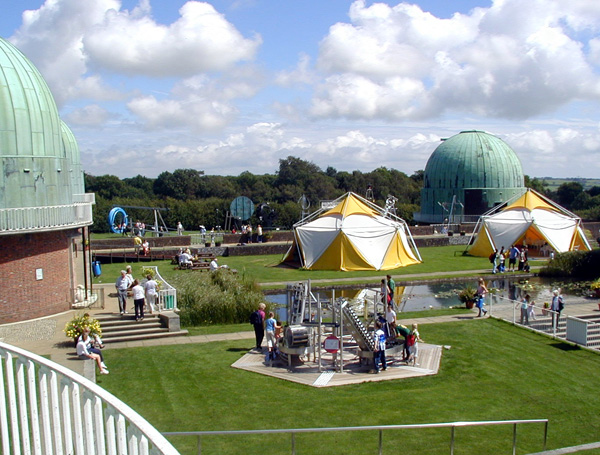
In Britain there is no shortage of possibilities: observatories, planetariums, historic locations and astronomy events can all make worthwhile society outings.
Places such as Herstmonceux in Sussex, Jodrell Bank in Cheshire and the Herschel Museum of Astronomy in Bath are examples of the kinds of places that astronomy groups may visit.
Larger astronomy shows and festivals can offer talks by astronomers alongside exhibitions where manufacturers and retailers demonstrate equipment.
These outings aren’t simply social occasions. They can introduce you to another part of astronomy and give you opportunities that would be much harder to arrange on your own.
Finding an Astronomical Society Near You
Finding a society today is considerably easier than it was when I first became interested in astronomy.
A simple internet search for an astronomical society in your town or county may be enough.
In the UK, the Federation of Astronomical Societies and the British Astronomical Association can also provide useful starting points when looking for local astronomy organisations.
Once you’ve found one nearby, visit its website and see what it offers.
Don’t worry about joining immediately. Find out when the next meeting takes place and contact the society.
Arrangements vary: some welcome prospective members to meetings or public observing sessions, while others may charge a visitor fee or ask you to become a member.
The important thing is simply to make that first contact.
More Than Learning Astronomy
There is one benefit of joining an astronomical society that doesn’t appear on an equipment list or meeting programme.
Friendship.
Astronomy can sometimes feel like a solitary hobby. After all, much of it involves standing outside in the dark looking upwards while most other people are indoors.
Joining a society changes that.
You meet people who understand why you become excited because Jupiter is particularly well placed, why you stayed outside until the early hours trying to photograph a nebula, or why you’ve spent half an evening looking for one faint object.
Some of those people may eventually become the friends you arrange observing sessions with. You may form a small group and travel together to darker locations.
Planning your first proper observing session? Our Stargazing for Beginners: Simple Guide to Your First Night Sky Adventure covers choosing a suitable location, what to take with you and how to prepare for a comfortable and enjoyable night under the stars.
And some of those friendships can last a lifetime.
Is Joining an Astronomical Society Worth It?
If you’ve recently discovered astronomy, I’d certainly recommend finding out what your local society has to offer.
- You don’t need an expensive telescope.
- You don’t need years of experience.
- You don’t even need to own a telescope at all.
What you need is an interest in the night sky and a willingness to learn.
Books, magazines, websites and videos can teach us an enormous amount about astronomy. But sometimes the quickest way to understand your telescope, find an object you’ve been struggling to locate, or discover an entirely new area of the hobby is simply to stand beside somebody who has already done it.
That’s what an astronomical society gave me.
And perhaps the greatest benefit is discovering that you don’t have to explore the night sky alone.
Clear skies.